When Economic Power Becomes Systemic Risk in Angola

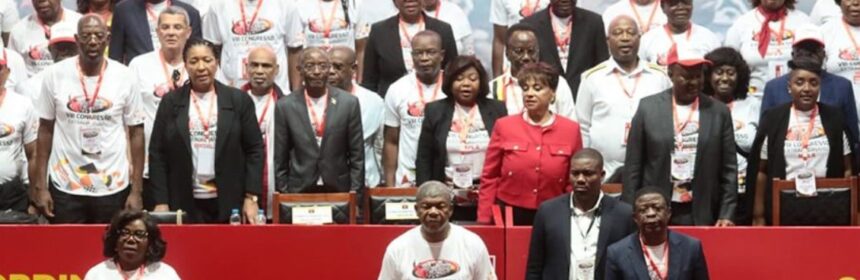
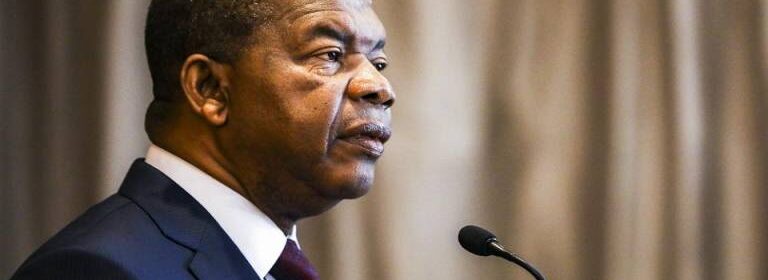
Angola’s diversification strategy was designed to reduce dependence on oil and build a competitive, broad-based economy. Instead, a growing body of public records suggests that economic power is becoming increasingly concentrated around a small number of politically connected conglomerates. At the center of this transformation stands the Carrinho Group. Over the past four years, the group has expanded from agro-industry into food importation, military logistics and banking, underwritten by presidential decrees, sovereign guarantees and state-backed financing. The Strategic Food Reserve: Over Half a Billion Dollars Mobilized The Strategic Food Reserve (Reserva Estratégica Alimentar — REA) was launched in 2021 as a national price stabilization and food security mechanism. In its first operational year alone, the Angolan state invested more than $200 million in the program, according to official reporting by the state-owned Rádio Nacional de Angola. Between late 2021 and 2022, President João Lourenço authorized four additional supplementary credit lines […]

Read more

In Angola, Security Laws Turn 11 Seconds into Six Months of Jail

Venâncio Lucungo was arrested on July 23 on charges of “provocation to war.” Six months later, he remains in detention at Calomboloca Penitentiary. No formal indictment has been served on his lawyer. The basis of the arrest: an 11-second excerpt from a public speech. Five days before Angola’s violent crackdown on striking taxi drivers last year, the Criminal Investigation Service detained 50-year-old Venâncio Filipe Ngondo Lucungo under accusations of rebellion, public incitement to crime, public apology of crime and provocation to war. The state-owned Angolan Public Television broadcast an official communiqué stating that Lucungo had encouraged citizens “to take up firearms and bladed weapons to rebel against the government.” The allegation rests on 11 seconds extracted from a speech delivered on July 13, 2025, during a public gathering linked to the inauguration of the main opposition UNITA municipal committee in Luanda. In the widely circulated clip, Lucungo is heard saying: […]

Read more

How Angola Is Using the Law to Manage Hunger and Dissent

Faced with hunger and economic decline, Angola’s government is turning to law as a tool of control — building a quiet architecture of authoritarianism. Authoritarianism rarely arrives with tanks in the streets. More often, it slips in through legal texts, regulatory agencies, and administrative procedures that appear technical, neutral, even modern. Angola is now offering a textbook example of how this happens. When President João Lourenço came to power, he invoked the legacy of Deng Xiaoping, the Chinese leader who argued that political legitimacy rests on a simple foundation: putting food on people’s tables. Economic growth, Deng believed, would do what ideology could not. Angola has followed the opposite path. Living conditions have deteriorated, hunger has spread, and economic opportunity has narrowed. Popular frustration today is not abstract or ideological — it is visceral. It is about food, jobs, and dignity. Instead of addressing these realities, the Angolan government has […]

Read more

Angola Jails One Teen, Kills Another

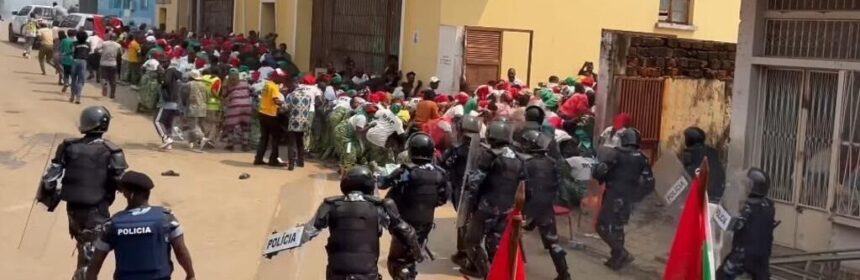
A teenager killed during Angola’s taxi drivers’ strike and his cousin jailed without charge reveal how police violence, political cover and judicial silence converge. On the first day of Angola’s taxi drivers’ strike, two teenage cousins left home in different parts of Luanda on ordinary errands. One would not return alive. The other has spent more than six months in prison without charge. José Ngola was 14 years old. Benvindo Ernesto João Zanga was 17. Their stories reveal not an isolated tragedy, but the routine mechanics of repression in Angola — a system in which lethal police force, prolonged pre-trial detention, and political cover converge, while courts remain silent. On the morning of 28 July 2025, José Ngola left his home in Golf II to buy a spare part for his father’s sewing machine. His cousin Benvindo left Camama to purchase a phone battery. That same day, amid police operations […]

Read more

Judges Breaking the Law to Jail Critics of President Lourenço

In Angola, judges are breaking the law to keep critics of President João Lourenço behind bars. The case of social activist Osvaldo Caholo is not an isolated judicial failure. When examined alongside the detention of Serrote José de Oliveira, widely known as “General Nila,” it reveals a consistent pattern of judicial non-compliance with the law in politically sensitive cases in Angola. On 12 January 2026, the Guarantees Judge of the 5th Section of the Criminal Division of the Luanda District Court, Maria Nazaré Dias, ordered activist Osvaldo Caholo to stand immediate trial on charges of Rebellion, Public Incitement to Crime, and Public Apology of Crime. At the same time, she unlawfully refused the adversarial investigation (instrução contraditória) requested by the defense counsels Bruno Xingui and Simão Afonso, despite clear provisions of the Criminal Procedure Code requiring adversarial judicial scrutiny when legal or factual objections are raised. Caholo had already been […]

Read more

Shot by Police, Jailed Without a Crime

“General Nila” has now been detained for six months. He was shot by officers of the Criminal Investigation Service while walking to a hospital with his siblings before being taken into custody, as documented by Maka Angola. On 14 October 2025, the Office of the Presiding Judge of the Luanda District Court denied a habeas corpus application submitted by defense counsel Hermenegildo Teotónio for street bookseller Serrote José de Oliveira “General Nila”. The ruling held that he was charged exclusively with the offence of Disruption of the Provision of Public Services, under Article 4 of the Law on Crimes of Vandalism, and with no other offence. “General Nila” has now been detained for six months. He was shot by and officer of the Criminal Investigation Service while walking to a hospital with his siblings, before being taken into custody, as documented by Maka Angola. On 4 December 2025, however, the […]

Read more

Manufacturing Enemies: Inside Angola’s Security State

Shot by police on the first day of Angola’s taxi drivers’ strike, a street bookseller known as “General Nila” has been held for over six months without formal charges. His case exposes a pattern of repression, suspended legality, and the deliberate manufacture of enemies to sustain power. Detained on 28 July 2025 after being shot by police on the first day of Angola’s taxi drivers’ strike, Serrote José de Oliveira — widely known as “General Nila” — has been held for over six months without formal charges. According to his family and lawyers, he remains in detention despite a guarantees judge’s order for his hospitalization and the rejection of a habeas corpus petition. Earlier that morning, Nila was walking with his younger brothers, Bartolo and Pascoal, to Talatona Municipal Hospital to visit a hospitalized relative. His family says they were not participating in any protest and that there were no […]

Read more

Cybersecurity: Angola’s Latest Tool of Authoritarian Consolidation

Angola’s proposed cybersecurity law, presented as a modern response to digital threats, instead deepens the country’s authoritarian drift by centralising state power, weakening judicial oversight and expanding surveillance across the entire digital sphere—posing a direct threat to the already fragile constitutional guarantees that remain in place. Angola has yet to experience a real democratic movement at all. What exists instead is a formal democratic Constitution that permits to entrench an increasingly authoritarian system of power, sustained by the absence of real political democratic alternation, weakened institutions and a systematically shrinking civic space. This system is usually referred to as an anocracy, combining elements typical of democracies with dictatorial practices. These systems are inherently unstable and prone to arbitrariness. Within this context, the proposed cybersecurity legislation must be read not as neutral regulation but as an instrument of authoritarian consolidation. It forms part of a broader legislative package designed to expand […]

Read more

War on Civil Society, Continuity of Plunder

Unable to halt Angola’s structural plunder, the government of João Lourenço has declared war on civil society. The new NGO law turns popular dissent into an enemy of the State and uses “security” as a smokescreen to protect a failing regime and the impunity of plunder. The proposed Law on Non-Governmental Organizations (NGOs) that the ruling MPLA is preparing to approve on January 22, 2025, is an act of political desperation. It is designed to conceal the disastrous governance of João Lourenço and to divert attention from Angola’s ongoing structural plunder. It is the latest manoeuvre by a party that has ruled the country without interruption since independence in 1975 — after five decades of state capture. From its preamble to its final chapters, the law abandons the constitutional framework of freedom of association (Article 48 of the Constitution of the Republic of Angola) and places NGOs under a permanent […]

Read more

Angola’s “Fake News” Law Risks Criminalising the Internet

Under the banner of fighting “fake news”, Angola’s new bill would expand state control over the internet — putting platforms like Facebook and WhatsApp under pressure and turning independent websites into targets. Civil liberties remain mostly on paper. Angola’s proposed law against “false information on the internet” is a deeply flawed piece of legislation. It is presented as a response to disinformation, yet it reads more like a blueprint for state control of digital speech. In a country where civil liberties are legally established on paper but routinely constrained in practice, this bill accelerates an already dangerous trend: eroding legally established civil liberties through expansive enforcement powers, vague standards and punitive sanctions.  The government claims existing legal tools are insufficient. But if gaps existed, they could be addressed by amending current offences to cover online conduct, preserving proportionality and legal certainty. Instead, the executive proposes a sweeping new regime that […]

Read more
1 2 3 4 49