
Angola’s War on Words: Turning Journalism into Espionage

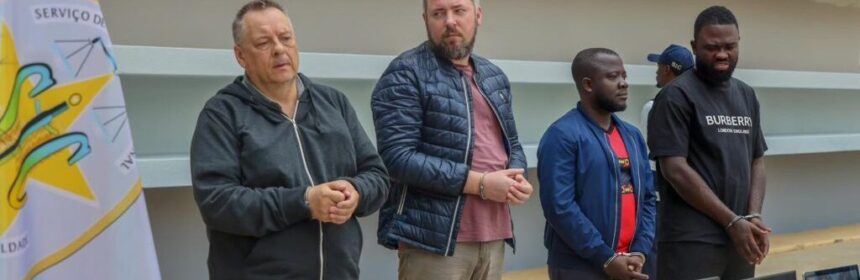
Angola’s case against journalist Amor Carlos Tomé treats opinion as conspiracy, press clippings as espionage, and critical writing as terrorism — exposing the fragility of the state’s narrative, not the danger of the accused. Angolan sports journalist Amor Carlos Tomé has been in custody since August, facing nine serious charges: espionage, terrorism, belonging to a terrorist organization, influence peddling, criminal association, incitement, active corruption, fraud and variations of the same. It is an imposing catalogue. But the weight of the accusation is not matched by the weight of the evidence. Prosecutors claim Tomé was the key operator in a Russian-backed conspiracy to overthrow President João Lourenço. The alleged weapon is not a gun, a militia, or a covert network — but the pen. Angola’s Public Prosecutor says the plot relied on recruiting journalists, analysts and content producers to create “instability” and “social convulsion”. No guns. No clandestine cells. Only texts. […]

Read more
The Maduro Case: Between International Law and Soy Milk

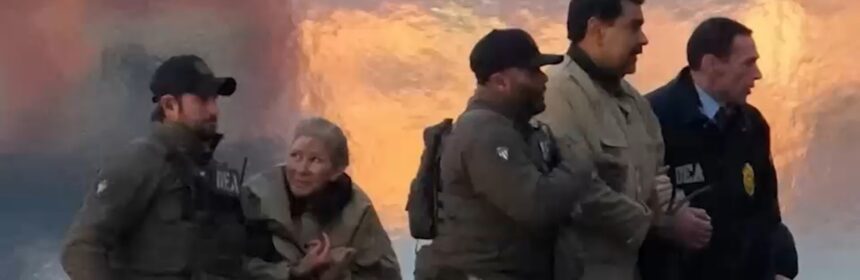
The arrest and prosecution of Nicolás Maduro exposes an inconvenient truth that has long been known: international law only matters when powerful states allow it to. In theory, the capture of an incumbent head of state by foreign forces without extradition or multilateral authorisation should trigger a serious international legal crisis. In practice, however, it barely registers. Once Maduro was brought to New York, international law became irrelevant. What matters now is US domestic law — and US courts have been clear about this for decades. American jurisprudence is based on the straightforward principle that the manner in which a defendant is brought before a court does not affect the court’s jurisdiction. This rule, known as the Ker–Frisbie doctrine, has repeatedly enabled U.S. courts to try foreign defendants, even when their capture abroad was illegal, coercive or militarised. Manuel Noriega’s case remains the classic precedent. Maduro’s case follows the same […]

Read more

When Politics Becomes a Crime in Angola

Angola’s prosecutors allege a Russian-backed plot to overthrow the government. What the indictment offers instead is a case study in how dissent can be rebranded as subversion. Angola’s Public Prosecutor has issued an indictment that reads less like a criminal case than a legal instrument and more like a geopolitical thriller. A foreign entity — Africa Corps (formerly the Wagner Group) — is accused of acting on behalf of the Russian state to engineer a coup d’état, manipulate public opinion, infiltrate political parties, and position itself to seize strategic national assets, including the Lobito Corridor, in the event of regime change. At the core of the case lies a striking premise: political activity, media criticism, and electoral engagement are reframed as instruments of terrorism. According to the indictment, the group allegedly pursued a dual strategy — destabilizing Angola’s political system while positioning itself to capture key economic assets as bargaining […]

Read more