Angola: Democracy Never Took Root in the MPLA

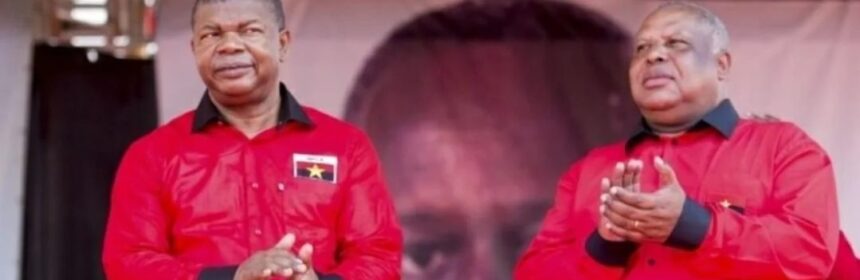
In December, João Lourenço will again stand as the sole candidate for the MPLA presidency at its ninth congress. The committee reviewing nominations rejected General Higino Carneiro’s bid, citing serious irregularities, including thousands of signatures deemed invalid or forged. Whatever the merits of those allegations, the outcome is clear. The party that has ruled Angola for more than half a century will once again choose its leader without a real contest. Carneiro’s exclusion is not a rupture but the latest expression of a tradition that predates independence. After Agostinho Neto assumed leadership of the MPLA in 1962, the movement organized itself around a simple principle, unity over competition and presidential authority over internal debate. Criticism was treated as disloyalty and dissent as a threat. Resistance emerged during the liberation struggle. Crises ranging from Brazzaville to the Eastern Revolt exposed the movement’s inability to accommodate political and organizational pluralism. Leaders and […]

Read more

Angola: Unitel Sale in Legal Limbo

The public sale of shares in Unitel, Angola’s largest telecommunications company, and the operator’s admission to trading on the country’s stock exchange mark an important stage in a privatisation programme that has so far offered investors few marquee assets. Unitel is a rare exception. On that basis alone, the transaction deserves support. Yet the deal comes with a legal complication that should not be relegated to the small print. Half of Unitel was transferred to the state by presidential decree in 2022, and the former owners continue to challenge that decision in court. If they ultimately prevail, the consequences could extend beyond the state and raise questions about the title acquired by new private investors. Unitel’s prospectus says the offering is intended to make shares available to Angolan and foreign investors, with a separate allocation for employees under the country’s privatisation law. The offer covers 15 per cent of Unitel’s […]

Read more

Angola’s Hidden Succession Crisis

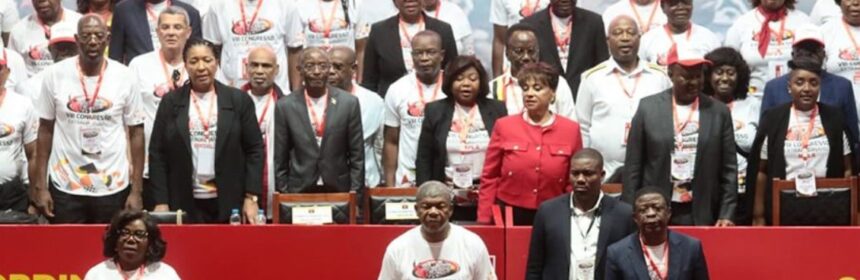
The election that may decide Angola’s future is not the general election scheduled for 2027. It may be the internal election of the ruling MPLA, at the party congress in December 2026. In Angola, the head of the national list of the party that wins the general election becomes president. The MPLA has governed since independence; its internal choices often become state decisions. Yet President João Lourenço is constitutionally barred from seeking a third presidential term in 2027. A serious ruling party would already be debating its next candidate, program, team and transition. Instead, Angola is being asked to stare into a fog. Lourenço wants to remain MPLA president. What he has not done is name a successor, organize a credible transition or open a real contest over the future of the party and the country. The silence is the message. It keeps the party dependent on his timetable, his […]

Read more

Tax Bill Risks Turning Every Citizen into a Suspect

Reading some of Angola’s recent legislation can leave one wondering whether the problem lies with the reader, the drafter or a lawmaker legislating for a country that exists only on paper. Article 45(2) of the proposed Personal Income Tax Code, known by its Portuguese acronym IRPS, states: “Financial institutions must also submit to the Tax Administration, by January 31 and through the electronic transmission of data, information concerning receipts credited to clients during the previous financial year.” The language may sound merely bureaucratic. Its implications are anything but. The provision would require banks to report every amount received on behalf of every client during the previous year. In effect, every sum entering a depositor’s account would be transmitted to the tax authorities — even a small gift from a grandmother to pay for biscuits. This is a striking example of how lawmakers, whether under pressure from international institutions or driven […]

Read more

Angola: The Country of Lourenço

Over the past years, Angola has come to be governed less as a republic and more as a personalized system of power. What once functioned as a party-state has gradually evolved into something narrower and more concentrated: a president-state. This transformation did not occur through rupture or overt authoritarian declaration. It unfolded quietly, through administrative practice, selective enforcement of the law, and the steady erosion of institutional counterweights. João Lourenço did not invent this system — but he consolidated and personalized it. For decades, Angola operated under a party-state logic, in which the ruling party absorbed state institutions. Under Lourenço, that model shifted. The party was not democratized; it was subordinated. Decision-making migrated from collective party bodies to the presidency itself. Today, the ruling party functions less as a space for deliberation and more as a mechanism of validation. Internal competition is discouraged, dissent is neutralized, and succession is carefully […]

Read more

Peace in DRC Won’t Come From a Signature

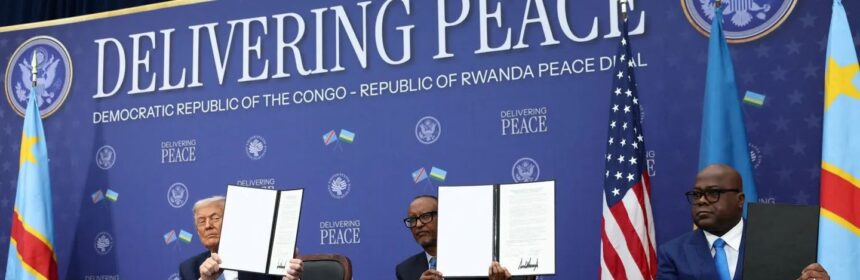
The Washington Agreement, presented with great ceremony as a turning point for peace in eastern Congo, unravelled almost instantly. Within hours of the signatures drying, fighting resumed across the region. The M23/AFC rebels—backed by Rwanda and not party to the agreement—accused government forces of launching new offensives. Kinshasa, in turn, reported fresh Rwandan bombardments of Congolese positions. The fanfare in Washington did nothing to alter facts on the ground. What the event did achieve was political theatre. The deal served primarily to bolster Donald Trump’s image as a peacemaker, echoing—deliberately or not—the misguided confidence of Neville Chamberlain in 1938, when he sought to secure peace by conceding Czechoslovakia to Nazi Germany. Like Chamberlain, Trump appears to believe that conflict can be contained with well-timed handshakes and generous rhetoric. Reality has already contradicted him. Yet buried within the diplomatic spectacle lies one idea with real potential: the Regional Economic Integration Framework […]

Read more

The President’s State of Health: A State Secret?

It makes you wonder: just how bad is the Angolan President’s health? Things must be grim if the entire state apparatus zips their lips, leaving it to the big man’s tiny grandson (as quoted in a social media posting by his mother Tchizé dos Santos) to tell the world that “vovó” (his grandpa) is “living a normal life”, “watching the TV news” in Barcelona. Really? Is that the best the Dos Santos family’s highly-paid Public Relations firms can do? Is this the MPLA’s strategy for deflecting the growing national anxiety about the state of the man and the nation he has ruled for 37 years? If he’s well and living a normal life, then why is he doing so in Spain instead of at home running his government? The truth, or bits of it, have leaked from multiple sources. At the beginning of this month (May 2017) something happened to […]

Read more

How Much Longer, Attorney General?

How much longer, João Maria, how much longer do we have to put up with you? The Attorney General of the Republic of Angola parades through the streets of Luanda with not an ounce of shame at the conflict of interest arising from holding public office while profiting from business dealings that have come his way only because of his position. What legal and moral conflicts? He is not just a shareholder in different companies, he has also served as a manager and legal consultant (e.g. in Prestcom) in spite of the constitutional prohibition on second jobs for office-holders. Additionally, General João Maria de Sousa has neglected the fundamental and basic premise of his job: to prosecute breaches of the law. He fails to investigate legal transgressions by members of the government, turns a blind eye to incontrovertible evidence of corruption, and sits on his hands when presented with egregious […]

Read more

Power: From Major to Minor

There was a time when my gaze was turned to the big picture: international relations, the behaviour of national governments and multi-national corporations.  These days, my focus has narrowed to governance on a small scale.  This is what I like to call “micro” politics compared to the “macro” politics that occupies the major news networks. Yet both can be equally afflicted by corruption and abuse of power. My ‘people’  (i.e. my particular community) elected me President without really knowing me all that well.  The previous ‘regime’ had failed in so many ways that it was enough that I was not the incumbent.   It was unexpected.  But somehow rather flattering (at least until realisation dawned as to just how much hard work lay ahead to right wrongs). In political life it’s a given that any individual or party’s early promise will eventually give way to cynical manipulation. Democratic procedures get nudged […]

Read more

Fears of the Fatherless

Angola’s Chief of Military Intelligence and Security Services, General António José Maria, better known as General “Zé Maria”, recently told a meeting with subordinates that President José Eduardo dos Santos had made “a grave mistake” in announcing that he would retire from politics in 2018. Maka Angola has learned from reliable sources, that the meeting was ostensibly called for operational purposes.  However, General Zé Maria was “visibly angry” over the presidential decision which apparently had “taken him by surprise”. He kept speculating aloud that the announcement may have been precipitated by the volatile socio-economic situation in Angola, for which the government has failed to come up with adequate solutions. According to General Zé Maria, “the announcement would only serve to sow confusion amongst the party faithful”, given that the President as yet has no effective exit strategy to prevent political upheaval or worse. Not that the General was offering any […]

Read more
1 2 3