Angola: Democracy Never Took Root in the MPLA
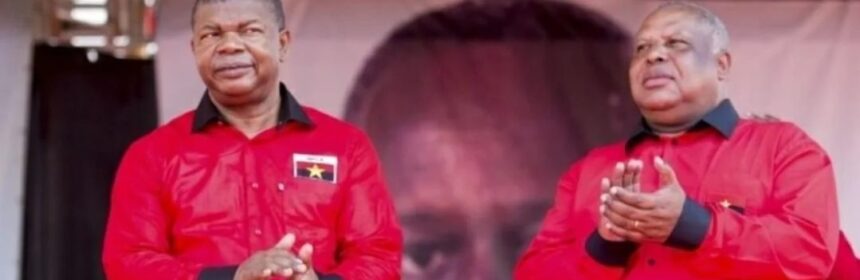
In December, João Lourenço will again stand as the sole candidate for the MPLA presidency at its ninth congress. The committee reviewing nominations rejected General Higino Carneiro’s bid, citing serious irregularities, including thousands of signatures deemed invalid or forged. Whatever the merits of those allegations, the outcome is clear. The party that has ruled Angola for more than half a century will once again choose its leader without a real contest. Carneiro’s exclusion is not a rupture but the latest expression of a tradition that predates independence. After Agostinho Neto assumed leadership of the MPLA in 1962, the movement organized itself around a simple principle, unity over competition and presidential authority over internal debate. Criticism was treated as disloyalty and dissent as a threat. Resistance emerged during the liberation struggle. Crises ranging from Brazzaville to the Eastern Revolt exposed the movement’s inability to accommodate political and organizational pluralism. Leaders and […]

Read more
Angola: Where Votes Count

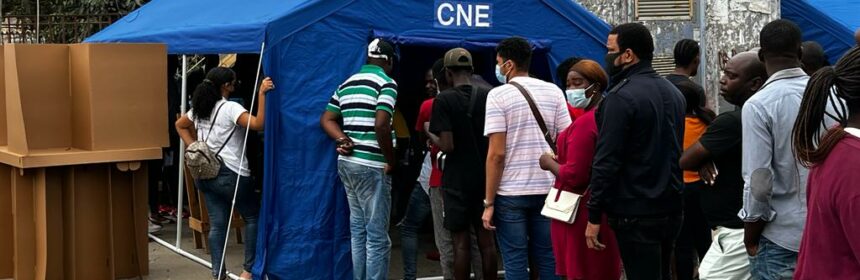
As Angola heads toward its 2027 general election, political debate has become consumed by familiar demands: rewrite the electoral law, replace the National Electoral Commission, invite more international observers. Each proposal is presented as the missing ingredient for a credible election. They all miss the central issue. Election integrity depends less on new institutions than on two simple questions: Who votes, and where are the votes counted? These are not merely technical matters. They determine whether citizens trust the result before it reaches the national authorities. Much of the discussion in Angola assumes that credibility flows from the top down—that better laws, stronger institutions or foreign observation will produce cleaner elections. Experience suggests the opposite. Public confidence is built from the ground up, beginning at each polling station where ballots are cast, counted and publicly announced. International observers can help, but they cannot certify every polling station in a country […]

Read more

Angola Elections 2022: What Next for the Opposition?

Attempts by Angola’s opposition parties to challenge the result of last month’s elections in the Constitutional Court (Tribunal Constitucional) have faltered, with just a week remaining before the official swearing-in of the MPLA’s João Lourenço as President for a second term. The official election results announced by the National Electoral Commission (Comissão Nacional Eleitoral, CNE) declared victory for the MPLA with 51% of the vote, with UNITA second on 43% – an outcome that reflected voters’ appetite for change. So where does UNITA go from here and how best can it capitalize on the public mood? ——————————– Provided Angola’s Constitutional Court certifies the election result, the country’s next President will be sworn in on September 15th. In all likelihood, that will once again be the MPLA candidate, João Lourenço, who faces an uphill battle after the significant setbacks in this election for which many in the party blame him directly. […]

Read more

Angola Elections 2022: Trouble Ahead?

Angola’s 2022 election seemed to go well. International observers dubbed the poll ‘free and fair’ and the official election organizer, the Comissão Nacional Eleitoral (CNE), declared the MPLA the victor with just over 51% of total votes cast. This official result was immediately challenged by the main opposition party, UNITA, amid allegations of inconsistencies in the count and procedural irregularities by the CNE itself. The situation risks undermining the all-too-recent gains in democratic freedoms and civil liberties, with opposition supporters taking to the streets to express their anger, feeling cheated of the change they desperately wanted. ————— When on August 29th the CNE announced the official election result, awarding victory to the ruling MPLA, it was immediately challenged by UNITA on the grounds of alleged inconsistencies between the certified polling station tallies and the final count given by the CNE. Initially, the main opposition, UNITA seemed to suggest the numbers […]

Read more

Challenging Angola’s Election Result

The official result of the Angolan elections gave victory to the MPLA with 51.17% of the total votes cast; UNITA coming second with 43.95%. UNITA reacted to the announcement by issuing a public statement that, until judgement is forthcoming in the legal challenges it submitted, the party would not accept the results given by the National Electoral Commission (the CNE) and would petition the Constitutional Court to freeze the CNE result pending judgement. UNITA’s statement makes three laudable points. First: the party has chosen to follow legal and institutional procedures to press its case, in line with the stance of the United States and European Union, who praised the peaceful conduct of the elections and urged that any dispute be settled through due judicial process. The UNITA leadership has thus rejected calls by ‘Trump style’ militants in the party who wanted to mobilize their supporters to march on parliament and […]

Read more

Devolution: Local Government Is the Way Forward

The situation in Angola’s is complex. The younger generation have shown the depth of their discontent with the lack of opportunity for study or employment. Young people in Angola see nothing to help them offered in politicians’ and technocrats’ speeches about the economy and they are desperate to change their lives for the better. This is why, in the election that just took place, the younger generation overwhelmingly voted for change, and they did so in an unparalleled peaceful and orderly manner. No good purpose could be served by creating a situation in which peace and tranquillity are abandoned for conflict and violence. Destructive behaviour now is not going to deliver employment or put food on the table. There has to be a political response that meets the aspirations of the younger generation, that eases the pain of a demographic that has shown it wants a radical change in politics, […]

Read more

Angola Elections 2022: Tense Times as UNITA Rejects Election Results

After an uneasy night in several Angolan cities, the funeral ceremonies for former President José Eduardo dos Santos began on Saturday in the presence of foreign heads of state. A military guard of honour accompanied the flag-draped coffin, as the cortege proceeded from the Dos Santos mansion in the upper-class neighbourhood of Miramar, and along the sweep of the bay to the Square of the Republic, led by a group of women chorusing “Angola weeps for Zedu”. The outgoing MPLA President, João Lourenço did not attend but is expected to be at the formal funeral ceremony on Sunday when his predecessor’s remains will be placed inside a mausoleum within metres of the rocket-shaped monument to Angola’s first President Agostinho Neto. Lourenço who expected to be re-elected comfortably after the August 24 poll, is apparently now facing a divided party and nation, many of whom accuse the MPLA of resorting to […]

Read more

Lourenço Loses Luanda

At long last. For the first time in the history of Angola the coming parliament will be more democratic, more balanced and more representative of ordinary people. It means voters now have an opportunity of getting their concerns heard as part of the legislative process. This is a first. A major victory by and for the people, and a big step towards turning Angola into a real democracy in practice and not just on paper. The 2022 elections will be remembered for the humiliating defeat of President João Lourenço’s party in Luanda, the Angolan capital, where a third of the 14 million strong electorate live. It was an unequivocal rejection of his party’s government and policies after 47 uninterrupted years of one-party rule by the MPLA. Late on Thursday, with just over 97% of the votes counted, the National Electoral Commission announced its provisional tally: the MPLA had won with […]

Read more

Angolan Elections 2022: Polling Day

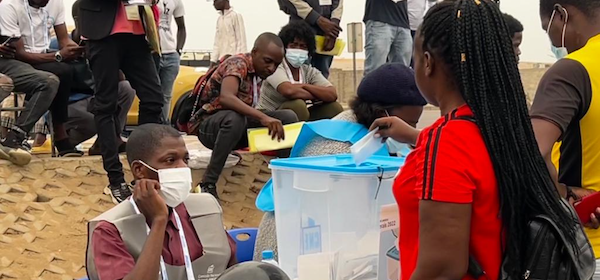
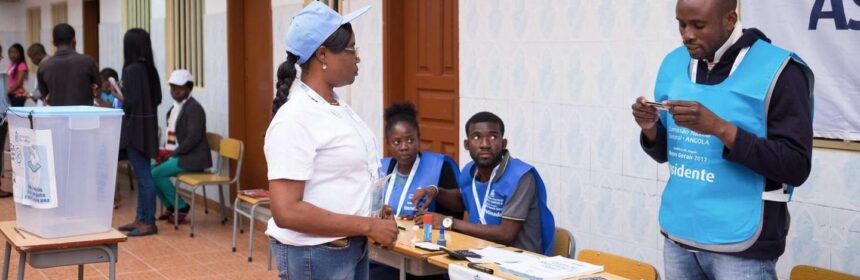
From the time the polls opened at 0700, Angolans streamed into the Assembleias de Voto [polling stations] around the capital, Luanda, where some 33 percent of the national votes are cast.  Maka Angola spent the entire day touring the three most populous areas of Luanda.  What we witnessed was a peaceful, orderly, and swift process so far as the voting was concerned – later there would be allegations of some irregularities with videos circulated on social media alleging attempted fraud. More than 14 million Angolans were eligible to vote in the August 24 poll and it was clear from the moment the Assembleias de Voto opened, that they would be busy.  All eight parties contesting this election had the right to appoint delegates as observers – but not all the parties could muster enough observers to scrutinize each one, as witnessed by national and international observers monitoring voting in diverse […]

Read more

Angola Elections 2022: Education

Angola does not have enough schools or teachers to meet the needs of a population growing by a million each year. Experts theorize (and parents instinctively understand) that education is key to social progress and it’s one of the key issues facing the political parties contesting this election: how to deliver their promise of free and universal education to university level. Both the governing MPLA and its main rival, UNITA, have promised to boost spending but they don’t go into detail in their published programmes and campaign speeches. Maka Angola has some suggestions. Education is one of the most visible indicators of social progress and the benefits are far-reaching. Education provides individuals with intellectual and practical skills that make them productive. It enhances living conditions by fostering social equity and justice. It develops human talent and civic virtues. Angola has experimented with different teaching models by default since achieving independence […]

Read more
1 2 3