
Inside Lourenço’s Head (Part I)
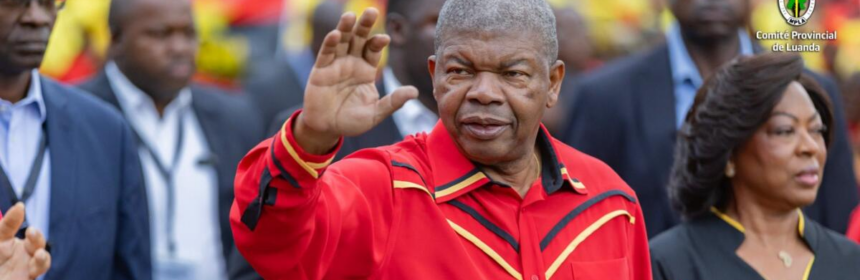
President João Lourenço has one head. Angola has more than 38 million. Yet a single head does the thinking, makes the decisions and disposes of everyone else’s resources. There is no indication that the presidential head is unusually large or endowed with supernatural intellectual powers. What is extraordinary is that so many institutions — the National Assembly, the defence and security forces, the judiciary, the ruling MPLA and the opposition UNITA — and so many citizens still behave as though the fate of an entire country rested on one man’s will.
On the streets, in markets and in family conversations, Angolans accuse Lourenço of treating the country as private property, the treasury as a personal bank account and its natural resources as a family inheritance. Having vented their anger, they return to their routines, poorer and more burdened than before.
The president decides. His small court benefits. In a familiar display of duplicity, members of that court fiercely criticise João Lourenço himself, often over lunch or dinner in Lisbon, perhaps already cultivating useful connections for the future.
João Lourenço has failed to make ethical government a practice that helps citizens regain trust in one another and in their institutions, or to bring government closer to those it should serve. He has failed to provide leadership that sets an example of respect for the common good, inspires hope and awakens a sense of duty, backed by policies that allow citizens to understand where the country is heading and envisage a better future. Leadership requires more than building hospitals: it means training doctors and other health professionals and ensuring they can care for those who need them. Nor is it enough to promise a metro system while failing to provide a public transport network that eases the daily ordeal of hundreds of thousands of people struggling to get to work and back home in Luanda.
Public indignation finds expression in a resigned lament, while the machinery of power, having long abandoned its responsibilities to society and the common good, remains voracious and merciless.
A school without water, a hospital without medicines or wages too low to buy enough food: people have come to accept these as natural features of Angolan life. This acquiescence grants a kind of daily absolution to the leaders who plunder the public treasury.
Meanwhile, according to a study by Olívio Quilumbo and Hélder Preza, João Lourenço has issued presidential authorisations worth more than $61.5 billion under simplified procurement procedures, breaching the principle of competitive tendering as a safeguard for transparency. Such a concentration of decisions over public resources exposes a state held in the president’s grip. Selected companies gain access to public wealth, while millions of Angolans fight over the crumbs of a country that belongs to them.
Yet no basis for these decisions is apparent in the Public Procurement Law. As the legal scholar Rui Verde notes, simplified procurement “constitutes an exception to the principle of competition, permissible only when technical, economic, legal or operational reasons, which must be explicitly stated, make a competitive procedure inappropriate or impossible, necessitating emergency procurement”. These exceptions are intended solely to address urgent circumstances requiring immediate procurement to safeguard the public interest. Where, in João Lourenço’s decisions, is the specific justification for each of the countless contracts awarded without competitive tender?
José Eduardo dos Santos sustained his rule by distributing opportunities for enrichment across a sprawling network of political, military and business allies. João Lourenço has narrowed the circle of beneficiaries while preserving the same predatory logic. He has not dismantled the machinery; he has concentrated control over it.
The fight against corruption has become a banner broad enough to conceal the new leadership’s looting. Citizens remain excluded from the wealth that feeds their rulers’ vanity and high-handedness.
An ill-informed, arrogant leadership, incapable of learning from the suffering it inflicts, finds in this resignation a licence to carry on. Incompetence governs because society bears its costs and continues to tolerate it.
Servitude Has Its Accomplices
Nearly five centuries ago, Étienne de La Boétie examined the question of voluntary servitude. How can multitudes submit to the will of a single man? In Angola, the question is uncomfortable because it forces us to look beyond the palace and acknowledge the thousands of people who carry out, justify and normalise presidential abuses.
Fear is real. An employee fears losing a job. A family depends on a food handout. But these people do not bear the same responsibility as the minister who justifies an abuse, the commander who orders a crackdown or the businessman enriched by presidential favour. To conflate these responsibilities is to absolve the beneficiaries and condemn the most vulnerable.
Fear explains some silences. But there is a prior question: do the hundreds of people in positions of power not fear the reaction of a population numbering in the millions?
Self-interest sustains many loyalties. Unquestioning allegiance turns the surrender of independent thought into a credential for access to power. Some cease to see the people’s poverty once they receive an appointment, a contract, a vehicle or other benefits. Personal expediency is renamed national stability. Plunder acquires well-dressed defenders, who swiftly move their gains abroad, undermining any prospect of sustained economic growth.
Then there is the complicity of those who know better. Professionals, intellectuals and officials privately acknowledge the disaster they publicly help to disguise. Caution seems to have become a profession. What purpose does intelligence serve? Meanwhile, ignorance governs, meeting nothing like the resistance it warrants. The silence of the educated lends an ill-informed leadership the appearance of a superiority it has never earned.