
Debunking the Myths of the Lobito Corridor

If hypocrisy needed a railway, it would look exactly like the Lobito Corridor. It is being hailed as a symbol of African progress. In truth, it is a mirror of everything negative the continent endures: Chinese debt, Western opportunism, Congolese blood, Angolan misrule—and a railway that connects foreign interests more efficiently than it connects the people who live along its tracks. It promises prosperity while delivering the same old extraction dressed in new flags. As Angola hosts the 7th African Union–European Union Summit, one of the flagship projects presented as proof of renewed partnership is the Lobito Corridor. Over the past year, Washington, Brussels and several media outlets have portrayed the corridor as a strategic Western response to China’s expanding influence in Africa—a seductive narrative suggesting a geopolitical comeback. President João Lourenço echoes this view, selling it as his diplomatic triumph and economic breakthrough. Yet the narrative collapses under basic […]

Read more
Luxury Amid Poverty: The Collapse of Angola’s Armed Forces

A Legacy Betrayed As Angola marks 50 years of independence on November 11, its Armed Forces (FAA) are facing an existential crisis. Behind the patriotic slogans and official parades lies a hollow institution — underfunded, poorly equipped, and stripped of dignity. Soldiers live in conditions that contrast starkly with the opulence of the ruling elite, turning the independence jubilee into a spectacle of luxury built on widespread deprivation. The struggle for Angola’s sovereignty was long and costly — millions of Angolans and countless unnamed heroes gave their lives for freedom, independence, and peace. Yet half a century later, the power they helped build has been captured by a small elite that governs through privilege rather than public service. To honor this legacy, the state must not glorify military symbols, but rather reform the institution itself. Strengthening the FAA means restoring discipline, modernizing logistics, and rebuilding infrastructure that has fallen into […]

Read more

The Regime That Needs Enemies to Rule

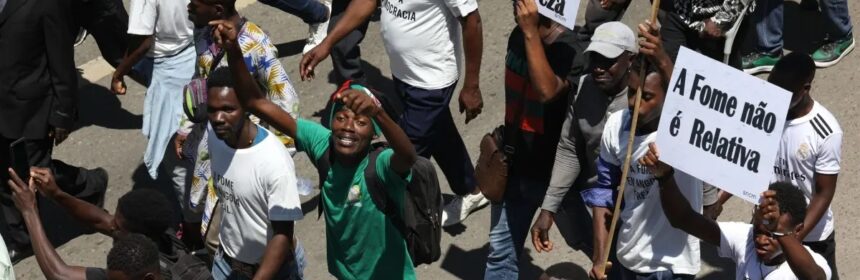
On July 28 and 29 the taxi drivers’ strike caused serious unrest and political tremors in Angola. The authorities violently suppressed the protests, resulting in more than 30 deaths and over 1,200 detentions. As usual, the government needed to construct a narrative of foreign interference to explain popular discontent and the crackdown. In a coordinated operation by defense and security bodies, the Angolan state accused Russia of fomenting acts of terrorism in Angola and detained two Russian citizens as “proof.” Three months later, the suspects still do not know what prosecutorial measures have been taken against them. Since 1975 Angola has maintained military cooperation with Moscow. On this historical basis, the commander‑in‑chief of the Angolan Armed Forces (FAA), President João Lourenço, has a top adviser — Lieutenant General I. Krasin of the Russian Armed Forces — with an office in the Military House of the Presidency at the Cidade Alta Palace. That same general also advises the […]

Read more