Amor Carlos Tomé: From Journalist to “Terrorist” (Part I)

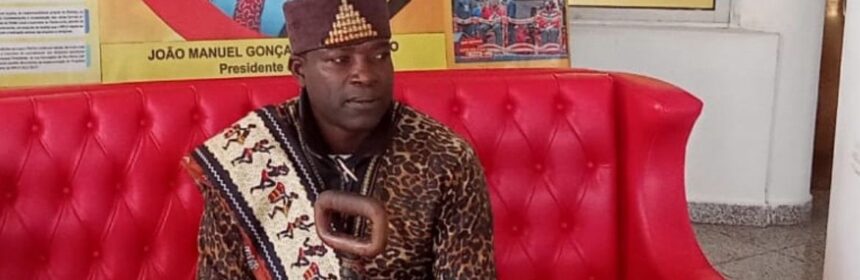
A public broadcaster journalist is charged with terrorism for texts describing a taxi strike that urged citizens to stay home. The case raises urgent questions about press freedom and criminal law in Angola. The Public Prosecutor’s Office accuses two Russian citizens and two Angolans of jointly committing the crimes of espionage, terrorism, terrorist organization, influence peddling, and criminal association. In this second article of the series, we examine in detail the case of Amor Carlos Tomé, a sports journalist at Angola’s public broadcaster Televisão Pública de Angola (TPA), portrayed in the indictment as the principal executor of an alleged Russian operation of terrorism and espionage aimed at staging a coup d’état against President João Lourenço. On 8 January, the Luanda District Court, 3rd Criminal Section, will begin hearing the defendants in the adversarial pre-trial phase. The accused are the Russian nationals Lev Lakshtanov (65) and Igor Ratchin (38), Francisco Oliveira […]

Read more

Angola: When the Party Enters the Bank

Angola’s continued placement under enhanced monitoring by the Financial Action Task Force(FATF) has once again exposed deep structural weaknesses in the country’s banking system. More than the existence of laws, what is at stake is Angola’s ability to demonstrate, in practice, an effective separation between political power, bank ownership, and financial supervision. The high concentration of politically exposed persons (PEPs) within the financial system — often concealed through opaque corporate structures — continues to undermine institutional credibility in the eyes of international regulators and partners. When the FATF placed Angola under enhanced monitoring in October 2024, the decision was framed as a technical alert. It led to clear political-institutional and economic consequences: heightened international scrutiny, increased compliance costs for correspondent banking relationships, and a higher perception of country risk. The overlap between political power and the banking system is not new in Angola. Over the years, several financial institutions have […]

Read more

Angola: The Country of Lourenço

Over the past years, Angola has come to be governed less as a republic and more as a personalized system of power. What once functioned as a party-state has gradually evolved into something narrower and more concentrated: a president-state. This transformation did not occur through rupture or overt authoritarian declaration. It unfolded quietly, through administrative practice, selective enforcement of the law, and the steady erosion of institutional counterweights. João Lourenço did not invent this system — but he consolidated and personalized it. For decades, Angola operated under a party-state logic, in which the ruling party absorbed state institutions. Under Lourenço, that model shifted. The party was not democratized; it was subordinated. Decision-making migrated from collective party bodies to the presidency itself. Today, the ruling party functions less as a space for deliberation and more as a mechanism of validation. Internal competition is discouraged, dissent is neutralized, and succession is carefully […]

Read more

Angola Land Scandal Exposes Deep Institutional Capture

Public land returned to the State in 2020 was quietly diverted inside Angola’s own institutions between 2021 and 2024. The IGCA falsified registries, erased beneficiaries, undervalued the land by 96-fold, and enabled private subdivision among companies linked to senior officials. Angola has once again exposed a truth its government works hard to bury: public assets are not merely mismanaged — they are actively fed into networks of political patronage operating inside the State itself. A new investigation shows how 82.6 hectares of State land on the outskirts of Luanda were quietly diverted to private interests through an internal scheme at the Instituto Geográfico e Cadastral de Angola (IGCA). It is a case that reveals not just corruption, but institutional collapse — the kind that thrives when no one in power expects to be held accountable. The plot originally belonged to União Cervejeira de Angola (ÚNICA), a brewing venture with Portuguese […]

Read more

Peace in DRC Won’t Come From a Signature

The Washington Agreement, presented with great ceremony as a turning point for peace in eastern Congo, unravelled almost instantly. Within hours of the signatures drying, fighting resumed across the region. The M23/AFC rebels—backed by Rwanda and not party to the agreement—accused government forces of launching new offensives. Kinshasa, in turn, reported fresh Rwandan bombardments of Congolese positions. The fanfare in Washington did nothing to alter facts on the ground. What the event did achieve was political theatre. The deal served primarily to bolster Donald Trump’s image as a peacemaker, echoing—deliberately or not—the misguided confidence of Neville Chamberlain in 1938, when he sought to secure peace by conceding Czechoslovakia to Nazi Germany. Like Chamberlain, Trump appears to believe that conflict can be contained with well-timed handshakes and generous rhetoric. Reality has already contradicted him. Yet buried within the diplomatic spectacle lies one idea with real potential: the Regional Economic Integration Framework […]

Read more

Debunking the Myths of the Lobito Corridor

If hypocrisy needed a railway, it would look exactly like the Lobito Corridor. It is being hailed as a symbol of African progress. In truth, it is a mirror of everything negative the continent endures: Chinese debt, Western opportunism, Congolese blood, Angolan misrule—and a railway that connects foreign interests more efficiently than it connects the people who live along its tracks. It promises prosperity while delivering the same old extraction dressed in new flags. As Angola hosts the 7th African Union–European Union Summit, one of the flagship projects presented as proof of renewed partnership is the Lobito Corridor. Over the past year, Washington, Brussels and several media outlets have portrayed the corridor as a strategic Western response to China’s expanding influence in Africa—a seductive narrative suggesting a geopolitical comeback. President João Lourenço echoes this view, selling it as his diplomatic triumph and economic breakthrough. Yet the narrative collapses under basic […]

Read more

Luxury Amid Poverty: The Collapse of Angola’s Armed Forces

A Legacy Betrayed As Angola marks 50 years of independence on November 11, its Armed Forces (FAA) are facing an existential crisis. Behind the patriotic slogans and official parades lies a hollow institution — underfunded, poorly equipped, and stripped of dignity. Soldiers live in conditions that contrast starkly with the opulence of the ruling elite, turning the independence jubilee into a spectacle of luxury built on widespread deprivation. The struggle for Angola’s sovereignty was long and costly — millions of Angolans and countless unnamed heroes gave their lives for freedom, independence, and peace. Yet half a century later, the power they helped build has been captured by a small elite that governs through privilege rather than public service. To honor this legacy, the state must not glorify military symbols, but rather reform the institution itself. Strengthening the FAA means restoring discipline, modernizing logistics, and rebuilding infrastructure that has fallen into […]

Read more

The Regime That Needs Enemies to Rule

On July 28 and 29 the taxi drivers’ strike caused serious unrest and political tremors in Angola. The authorities violently suppressed the protests, resulting in more than 30 deaths and over 1,200 detentions. As usual, the government needed to construct a narrative of foreign interference to explain popular discontent and the crackdown. In a coordinated operation by defense and security bodies, the Angolan state accused Russia of fomenting acts of terrorism in Angola and detained two Russian citizens as “proof.” Three months later, the suspects still do not know what prosecutorial measures have been taken against them. Since 1975 Angola has maintained military cooperation with Moscow. On this historical basis, the commander‑in‑chief of the Angolan Armed Forces (FAA), President João Lourenço, has a top adviser — Lieutenant General I. Krasin of the Russian Armed Forces — with an office in the Military House of the Presidency at the Cidade Alta Palace. That same general also advises the […]

Read more

Nova Cimangola: Angola’s Independence for Sale

In his State of the Nation Address, President João Lourenço proudly declared that Angolans are celebrating “50 years as a sovereign State, 50 years as a free people, masters of their own destiny.” Yet for many Angolans, these words ring hollow. Nova Cimangola — seized by the Angolan State in 2020 after reclaiming the 49% stake formerly held by Isabel dos Santos — should have been a symbol of restored economic sovereignty. Instead, it has become a textbook case of internal neo-colonialism, where Angolan citizens watch their own public enterprise treat them as second-class workers on their own soil. A New Colonial Caste System More than 1,000 Angolan employees receive low wages at Nova Cimangola. Meanwhile, just 70 expatriates are paid over US $13 million annually — more than the total payroll of the entire local workforce. A Portuguese cafeteria manager earns US $8,000 a month — far more than […]

Read more

A Pencil Against a Billion Dollars

Days ago, in the village of Miumba, in the historic municipality of Cahama (Cunene Province), I witnessed the raw portrait of education in Angola. A class of children sat under a tree for their Mathematics lesson on geometry. The teacher drew houses on a board and asked the children to color them. But there were no colored pencils. Many didn’t even have a regular pencil. The few that existed were nothing but worn stubs, so short that scratching a line on paper seemed like wasting gold. Three classes meet this way; each gathered beneath the largest trees in the community. Circles of stones mark where the children must sit. These children, the sons and daughters of pastoralist families, live in an Angola that has yet to arrive for them. Every stroke of the pencil was an act of resistance, every mark on a notebook a silent cry against abandonment. To […]

Read more
1 2 3 4 5 6 49