
Between Succession and Collapse: Angola at the End of Lourenço’s Rule
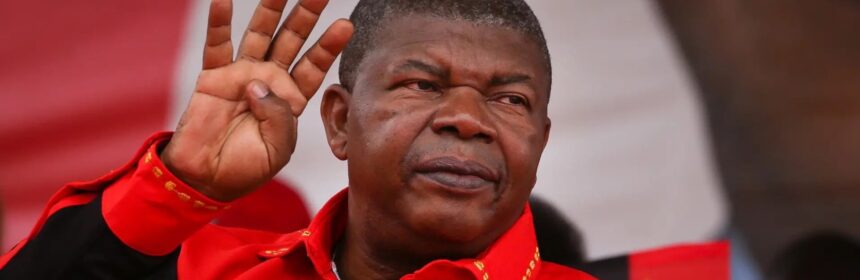
Before asking who will succeed João Lourenço, a more uncomfortable question looms: what kind of country will he leave behind at the end of his final term?
The issue is not merely one of political succession, but of structural inheritance. Over a decade in power, what has taken shape is not a reformist project, but the deepening of a system built on revanchism, state capture, and misgovernance.
As Angola approaches a decade under João Lourenço, it has not emerged as a stronger or more just state—it has grown more centralized, more opaque, and more exposed to the whims of unchecked presidential power.
The case of General Higino Carneiro illustrates the pattern. Cleared by the Supreme Court of corruption charges, he re-emerged in the political arena—only to face new accusations as he positioned himself as a contender for the leadership of the MPLA. This sequence suggests not a consistent system of accountability, but one that is selectively activated when political interests are at stake.
The most serious failure of this political cycle lies in the refusal to reform the institutional foundations of the state. The judicial system has remained subordinated to political authority, unable to assert itself as an independent guarantor of legality and institutional balance. Rather than limiting power, the judiciary has often been weaponized to enforce it selectively.”
At the same time, the architecture of an imperial presidency has remained intact, without effective mechanisms of oversight or accountability. No serious constitutional reform has been undertaken to rebalance the political system, return power to citizens, or establish clear limits on executive authority.
If there is one central instrument in the maintenance of political power, it is the ability to project authority—and, ultimately, fear. In Angola, that role remains closely tied to the armed forces. Paradoxically, despite being a general, João Lourenço’s tenure has been marked by the structural neglect of the very institution he once embodied.
Far from any meaningful effort at modernization or professionalization, the armed forces have been left to deteriorate. Across large parts of the country, military barracks remain precarious structures built of straw and mud, or corrugated sheet—conditions unworthy of any military that claims professionalism and dignity. This is not merely a question of material conditions, but of institutional disregard.
This neglect weakens not only the country’s defense and border control capacity, but also exposes a deeper contradiction: the state preserves the appearance of strength while hollowing out its own instruments of power. Over time, this imbalance may prove dangerous—not only for internal stability, but for national security itself.
The degradation of the state apparatus is the other face of this decade. The public administration, which should be grounded in merit, stability, and dignified working conditions, remains captured by clientelism, low wages, and a lack of incentives for excellence. Instead of a professional body capable of implementing public policy with rigor and continuity, what has emerged is a demotivated bureaucracy, vulnerable to political pressure and often driven by individual survival.
Without serious civil service reform—one that values merit, professionalizes careers, and ensures basic working conditions—any ambition of sustainable development remains rhetorical. The state fails not only for lack of resources, but for lack of structure, vision, and commitment to the public interest.
To this must be added another profound silence: the absence of curricular reform in education. In a country that should prioritize human capital, the education system remains anchored in outdated frameworks. Current curricula, designed in 2000 to support the 2004 reform, are now nearly two decades out of date. By international standards, such frameworks should be revised every five to six years—meaning Angola should already have implemented at least three additional reform cycles.
Instead, only minor adjustments have been made to textbooks and content, while the overall structure of education remains largely unchanged.hisotry. The result is a system incapable of preparing new generations for contemporary challenges, perpetuating inequality and undermining the country’s future.
From an economic standpoint, the legacy is equally stark. Between 2017 and today, President João Lourenço has approved more than US$61 billion in contracts without public tender, according to a review of presidential decrees issued during his time in office — a scale of executive discretion that underscores the structural nature of the system. https://www.makaangola.org/2026/02/angolas-u61-5-billion-contracts-by-presidential-decree-no-public-tender/
Rather than fostering a competitive and diversified environment, Lourenço has encouraged the emergence of oligopolies that contribute little to productivity or economic modernization, functioning instead as conduits for state resources. The promised economic diversification has remained rhetorical, with no meaningful policy outcomes to support it.
At the same time, Angola has failed to attract significant foreign investment capable of driving strategic sectors and introducing competitive standards. Instead, a pattern of entanglement between political power and business elites benefiting from public contracts has persisted, undermining trust, distorting markets, and reinforcing a closed economic model.
The succession
It is in this context that the question of succession becomes decisive. More than the 2027 general elections, the real moment of political determination lies in the MPLA’s congress, scheduled for December 2026. After half a century in power, the party remains the central arena where Angola’s political future is decided.
There is also a responsibility that can no longer be ignored: that of the party’s rank and file. By repeatedly placing the party above the country, MPLA militants have become co-authors of the system that now suffocates institutions and impoverishes the very citizens they claim to represent. Blind loyalty is not a political virtue—it is abdication. Every complicit silence, every resigned acceptance, every automatic applause has helped consolidate the current state of capture, inequality, and misgovernance.
History does not absolve those who had a choice—and chose not to act.
The central question is simple, yet consequential: will party members be able to influence a minimally competitive process with multiple candidates, or will they passively accept that João Lourenço determines his successor without contest?
Recent history offers a revealing precedent. In 2018, the logic of dual power—which would have allowed José Eduardo dos Santos to retain control of the party while Lourenço held the presidency—was swiftly dismantled. Power does not tolerate prolonged sharing. A full transfer of control was enforced.
Today, considering the accumulated results of a decade marked by concentrated power and the absence of structural reform, a legitimate question arises: with what political legitimacy can Lourenço remain at the head of the party and, from there, shape the country’s future?
In this context, it becomes clear that Angola’s problem is not merely one of leadership, but of political architecture. Alternation within the MPLA alone will not resolve a system designed to concentrate power and limit choice. Nor has the alternative offered by UNITA demonstrated the capacity to break with this structural logic.
Angola remains trapped in a system in which citizens do not directly elect their president but merely ratify pre-determined party lists. The head of the winning list is then proclaimed President. In practice, power circulates within a closed perimeter, largely immune to genuine renewal and meaningful accountability.
The country needs more than a change of faces—it needs institutional rupture. A constitutional reform that restores to citizens the right to directly elect the head of state, that clearly separates powers, and that establishes robust mechanisms of oversight and accountability. A system in which the president is not the automatic product of a party list, but the result of a direct, transparent, and competitive choice.
Without such transformation, any succession will be little more than a staged transition—managed within the same system that produced capture, inequality, and institutional decay.
The question, therefore, is not who comes next.
It is whether Angola will continue to accept a system designed to ensure that no one truly new ever reaches power.