
Constitutional Breach: Secretary of State Remains Director-General of IGCA
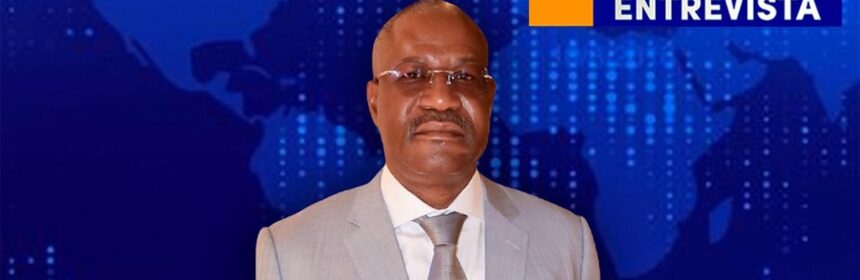
On 3 March 2026, four months after assuming office as Secretary of State, Conceição Cristóvão convened IGCA employees to a meeting scheduled for 6 March to discuss the institute’s internal functioning — signing the notice in his capacity as Director-General. Today, 6 March, he has presided over that meeting.
Similarly, Adilson Freire, who serves as head of the IGCA Director’s Support Department, combines these duties with those of chief of staff to the Secretary of State for Urbanism and Housing. Symptomatically, Adilson Freire took office as chief of staff to the Secretary of State in a private ceremony, without this information being posted on the Ministry’s website.
Since 30 October 2025, Conceição Luís Cristóvão has served as Secretary of State for Urbanism and Housing. Under the Angolan Constitution and the legal framework governing public administration, appointment to this office makes it incompatible for him to continue exercising the functions of Director-General of the Geographic and Cadastral Institute of Angola (IGCA).
The Constitution of the Republic of Angola establishes the fundamental principles of the rule of law, including legality, the hierarchy of norms, and the subordination of the administration to the Constitution and the law (Articles 2 and 6).
More specifically, Article 138 of the Constitution, which regulates incompatibilities for members of the executive branch, determines that the offices of Minister of State, Minister, Secretary of State and Vice-Minister are incompatible with the exercise of remunerated employment in any public or private institution, except for teaching or scientific research activities.
Under paragraph 2(a) of the same article:
“The offices of Minister of State, Minister, Secretary of State and Vice-Minister are incompatible with remunerated employment in any public or private institution, except teaching or scientific research activities.”
The position of Director-General of a public institute clearly constitutes remunerated public employment within the state administrative structure.
Beyond this formal constitutional incompatibility, the accumulation of both positions would also create a structural problem of administrative self-supervision.
A Secretary of State is part of the executive branch and exercises powers of oversight, supervision and political direction over the services and public institutes within his sector. A Director-General, by contrast, is an administrative official subordinate to that same governmental supervision.
Holding both offices would place the same person simultaneously in the position of supervisor and subordinate, violating fundamental principles of public administration, including administrative impartiality, good governance, and the separation between political and administrative functions.
These principles arise from the constitutional framework governing the organization of the executive branch and public administration, particularly Articles 134 and 198 of the Constitution.
Accordingly, appointment to the office of Secretary of State necessarily requires the immediate cessation of functions as Director-General, in order to avoid constitutional incompatibility, conflicts of interest, and the institutional capture of the administrative structure itself.
The Constitution prohibits the accumulation of these functions. Yet the Secretary of State continues to summon employees as Director-General of the IGCA. Who allows this constitutional violation — the President of the Republic, João Lourenço, or the Minister of Urbanism, Public Works and Housing, Carlos Alberto Gregório dos Santos?