Pro-Dos Santos Militias Attack Activists at Home

A group of about 15 people attached to Angolan pro-government militias, armed with pistols, machetes and iron rods, have attacked the group of young people who have been co-ordinating demonstrations against President José Eduardo dos Santos since March 2011. President Dos Santos’ 32 year rule is tied for the longest in Africa. Shortly after 10pm on Tuesday night the attackers burst into the home of rap artist Casimiro Carbono in Luanda’s Nelito Soares neighbourhood, where ten youths had gathered. With pistols in their hands, the attackers violently beat Gaspar Luamba, Américo Vaz, Mbanza Hamza, Tukayano Rosalino, Alexandre Dias dos Santos, Jang Nómada, Massilon Chindombe, Mabiala Kianda, and Jeremias Manuel Augusto “Explosivo Mental”. Their host, Casimiro Carbono, avoided the attacks as he had gone outside a few moments earlier to take a telephone call. Afonso Mayanda, known as “Mbanza Hamza”, 26, said the attackers carried out the attacks in a quick […]

Read more

Multimillion-dollar Retirement in the FAA

During the course of this year, several army generals of the Angolan Armed Forces (FAA) will be demobilized, as part of a retirement scheme set in motion by the Commander-in-Chief, the president José Eduardo dos Santos. According to a source from the FAA General Staff, “this year alone 14 generals should be demobilised, and next year a further 20 will be retired”. Among the officers notified for retirement, the most prominent are general Rafael Sapilinha Sambalanga, Inspector-General of the Ministry of Defense; general Eduardo Martins, advisor to the Minister of Defense; general Fernando Araújo, former head of Weapons Procurement Main Directorate; general Aires Africano, head of Health Services of the General Staff; general António Filomeno Carvalho Pereira, former head of Special Forces of Central Command of Operations. According to the source, who prefers to remain anonymous, the Commander-in-Chief has stated the “ageing” of the officers to be demobilised and the […]

Read more

Understanding President Dos Santos Rule and the Gaming of His Succession

The past year witnessed a critical shift in Angolan politics with regular youth-led public protests calling for the President’s resignation. Two factors made the outcry for Dos Santos to step down the main challenge to both the conventional political discourse and public perceptions of power: the 2010 Constitution and the popular uprisings in North Africa. This paper provides a brief narrative of the power struggles between the President and his own party, since the establishment of a multiparty system in 1991. It addresses the deployment of constitutional coups, patronage and legal measures to address such internal rifts, as well as the consequences that reverberate today. The Opportunity The 2008 legislative elections offered President Dos Santos the most legitimate, ambitious and unique opportunity to extend his grip on power, as well as to reform the state and its political economy. His ruling party, the Popular Movement for the Liberation of Angola […]

Read more

Dos Santos: Nepotism and corruption in CNN Broadcast Deal

President José Eduardo dos Santos’s regime has made great efforts to present Angola to the world as a place of modernity, good governance and prosperity, and as a country that looks after its citizens. Official budget documents show that, for the 2012 fiscal year, Dos Santos has set aside has set aside about US$40 million from the presidency’s budget for an initiative run by his own son and daughter for promoting a positive image of Angola to the world. A private Angolan company, Semba Comunicação, has borne the responsibility of improving the image of the Angolan regime since 2006. The company claims that soon after its launch it presented on CNN International “the campaign that changed the concept of African public relations at the level of the international media”: the “Angola, grow with us” campaign by the National Private Investment Agency (ANIP). Out of the share of the presidential budget […]

Read more

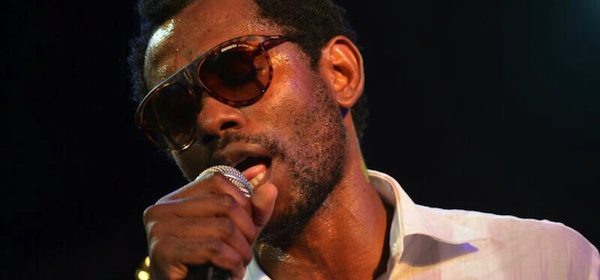
Rapper MCK in the Banana Republic

Eight years ago, a brutal murder committed by members of President José Eduardo dos Santos’ praetorian guard served to bring an Angolan rapper known as MCK into the political limelight at the young age of 22. On November 26, 2003, soldiers from the Presidential Guard Unit (UGP) tied up and dragged a man called Arsénio Sebastião “Cherokee”, into the sea at Mussulo quay in Luanda. They drowned him, ignoring the pleas for mercy from the crowd gathered at the scene. What crime could Cherokee possibly have committed to deserve such a public, summary execution? The soldiers heard Cherokee humming “A Téknika, as Kausas e as Konsequências” (Techniques, Causes and Consequences), by MCK, which was a scathing criticism of the Dos Santos government. The guards killed Cherokee on the spot as a lesson to everyone. MCK’s album was an improvised, underground production, distributed by street vendors. Minivan drivers, who transport the […]

Read more

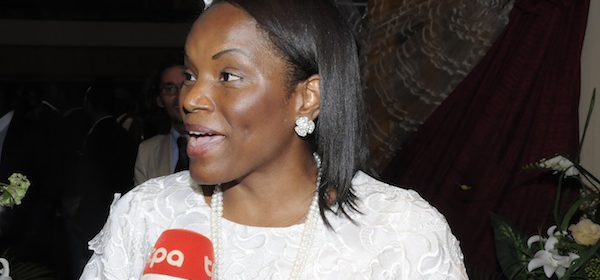
Tchizé dos Santos: Diamonds are a Girl’s Best Friend

On 5 November 2010 the president of the Republic of Angola, José Eduardo dos Santos, authorised the minister of Mining and Industry to extend the terms of a diamond mining concession in Lunda-Norte province, primarily to the benefit of his daughter Welwitschea José dos Santos, usually known as ‘Tchizé’. Presidential Decree 296/10 of 2 December 2010 ordered a two-year extension to Projecto Muanga’s Licence for Prospecting, Research and Identification for Kimberlite diamonds, in Lunda-Norte province. President dos Santos initially authorised the project on 14 July 2005 as a partnership between the state diamond company Endiama (51 per cent), Sociedade de Desenvolvimento Mineiro – SDM (20 per cent), Odebrecht (19 per cent) and Di Oro (10 per cent). SDM is a joint venture between Endiama and Odebrecht, a Brazilian multinational. Di Oro – Sociedade de Negócios, established in 2003, is owned entirely by Tchizé dos Santos (73.34 per cent), her husband […]

Read more

The ill-gotten gains behind the Kilamba housing development

Since last July, thousands of Angolan citizens living in Luanda have been making desperate efforts to acquire state-funded public housing apartments in the Kilamba development. The private real estate company hired to sell the apartments and funded by the state, Delta Imobiliária, charges prices ranging from US$125,000 to US$200,000 per apartment. These unaffordable prices, and the disclosure of the names of Delta Imobiliaria’s shareholders, reveal yet another corruption scandal. Contrary to the government’s established ceiling prices for state-funded social housing, Delta is overpricing the units by two to three times. On 5 August 2010, the President of the Republic, José Eduardo dos Santos, announced that struggling Angolan families would be able to buy state funded social housing for a maximum price of US$60,000 per unit. He made the announcement during his speech at the meeting of the National Program for Social Housing, held at the presidential palace. In the run […]

Read more

The Angolan Presidency: the Epicentre of Corruption

This report shows how the Presidency of the Republic of Angola has become the site of shady business deals, a fact that has consequences for citizens’ freedom and development, as well as for the country’s political and economic stability. The text responds President José Eduardo dos Santos’s call, on 21 November 2009, for a zero tolerance policy against corruption. For the sake of clarity, this investigation limits itself to a small demonstration of the business practices employed by the minister of State and head of the Military Bureau (Casa Militar) in the Presidency, General Manuel Hélder Vieira Dias Júnior “Kopelipa”. This is the man responsible for co-ordinating the defence and security sectors of the state. General Kopelipa is one of the triumvirate that today dominates Angola’s political economy, along with General Leopoldino Fragoso do Nascimento “Dino”, the presidency’s head of telecommunications, and Manuel Vicente, the chairman and CEO of the […]

Read more

President’s Three Henchmen Lead the Plunder of State Assets

In his latest report, “The Angolan Presidency: The Epicentre of Corruption”, Angolan journalist and human rights activist Rafael Marques de Morais focuses on the illicit business links of a powerful triumvirate of officials close to President José Eduardo dos Santos. These officials are the head of the Military Bureau of the Presidency, the head of Telecommunications at the Presidency, and the CEO and chair of national oil company Sonangol, respectively General Manuel Hélder Vieira Dias Júnior “Kopelipa”, General Leopoldino Fragoso do Nascimento, and Manuel Vicente. “Their dealings acknowledge no distinction between public and private affairs, and this has allowed them to channel millions of dollars worth of state assets into their own private businesses,” Marques de Morais says. One of the tools used by these officials for their private operations, according to the report, is the power and the international reputation of Sonangol as well as their influence on the […]

Read more

Foul Play: Corruption and the 2010 Africa Cup of Nations

On 31 January 2010, Egypt emerged the victor in the Africa Cup of Nations, for the seventh time. Celebrations erupted in Cairo, while in Angola, which organised and hosted the championship, the final marked the return to reality. The Angolan government announced that is has spent $600 million on building four stadiums. The 11 de Novembro Stadium, in Luanda, with a capacity of 50 000, was budgeted at $227 million. In a country where the government rules through corruption and disrespect for the law, public works projects invariably involve shady institutional decisions regarding state contracts, to the primary benefit of political leaders. In between the football matches I took the time to investigate the points at which corruption and influence peddling could potentially occur in the process of organising the Cup of Nations. The first case that I am reporting concerns the inspection contract for the construction of the Luanda […]

Read more
1 8 9 10 11