Arresting the Shabby and Shorty Journalist

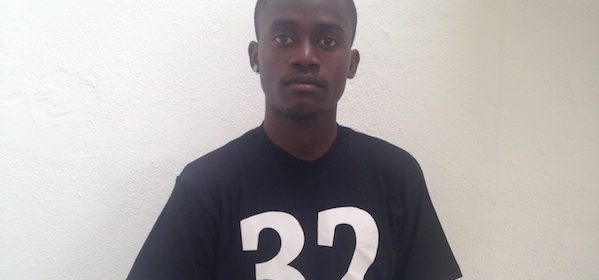
In a repressive state with the veneer of democratically elected institutions, such as Angola, the ways in which abuse can be rationalized make parodies. Journalist Coque Mukuta, 28, experienced such a parody on January 4, 2013, while interviewing women street vendors on the arbitrary police beatings against them, for selling in the streets of Viana, in the outlays of Luanda. “I personally saw, while doing my work, six police officers severely lashing women street vendors with electric wires,” said Mukuta. Rather than leaving the area, the journalist, who is the correspondent for the Portuguese service of Voice of America, remained adamant in finishing the recording of his third interview on site. “They [the six police officers] came straight at me, hauled me off into their vehicle, confiscated my equipment, and slapped me several times, and told me I would be thrown in jail,” he said. At the municipal command of […]

Read more

Trafigura and the Angolan Presidential Mafia

In two years of operations in Angola, Pumangol has become a leading player in the marketing of Angolan oil, as well as in the distribution of oil products in the country. This company is a joint venture between multinational Puma Energy, a subsidiary of Swiss based company Trafigura, and its Angolan counterpart Cochan. In August 2010, President José Eduardo dos Santos authorized a total of five investment contracts worth US$ 931 million, by multinational Puma Energy and its Angolan partner Cochan. In  a country ranked among the 15 worst in the world to do business, the rapid success of Trafigura and its subsidiary Pumangol  is, by its own right, a case study and one for an in-depth investigation into its dealings with the presidential inner circle. The Geneva-based company benefits of a swap contract with Sonangol. Trafigura receives Angolan crude oil (in unknown quantities) in exchange for delivering all petroleum […]

Read more

Water for Chevron and a Lesson for the Government

A U.S oil multinational, Chevron, recently kick-started a new venture in Luanda’s most affluent residential area, Talatona:  a water well for the consumption of its employees. The first well for the rich, privileged and expats, in a luxury gated community, is about to pump water to the 100 houses of Condomínio Monte Belo (Beautiful Heights), where most of Chevron’s expat employees live.  Since the August 31 elections, the Angolan capital, Luanda, a sprawling urban chaos with more than five million people, has been plagued by severe water and electricity shortages. Monte Belo is one of the extravagantly expensive gated communities that have mushroomed south of Luanda and it is worth over US $250 million. Chevron commissioned the real estate project to the Brazilian construction multinational Odebrecht, in a joint-venture with a local private company Sakus Empreendimentos e Participações, set up by Sonangol oil executives. Sakus is currently fronted by Mirco […]

Read more

Angola’s Sovereign Wealth Fund – the US $5 billion logo

The Angolan Sovereign Wealth Fund (FSDEA) was launched in October to great fanfare, receiving global media coverage from the likes of the New York Times, CNN and Euromoney. Local and international journalists packed into the shiny new offices by Sagrada Família upmarket area in Luanda to admire the glass and steel spiral staircase, lacquered furniture and raw silk wallpaper. They were given stylish press packs featuring black and white photographs of smiling Angolan children and told how the FSDEA would change Angola for the better and preserve the country’s great oil wealth for the use of future generations. After a lavish lunch buffet complete with drinks served by a suited barman, there was a film shown by a South African production team who had collated clips of “ordinary” Angolans saying how much they loved their country, and a mumbled speech and Powerpoint presentation from Board Chairman Armando Manuel. In the […]

Read more

Alternating Demonstrations: Political Protest and the Government’s Response in Angola

In March 2011, at the height of the North African street protests, an anonymous letter went viral. It called for a mass demonstration in Luanda’s Independence Square, in the capital of Angola, on March 7, 2011. At this symbolic demonstration, the police arrested all seventeen individuals who attended, including three journalists and their driver who were there to cover the event. The ruling Popular Movement for the Liberation of Angola (MPLA) politburo accused Western intelligence services, as well as pressured groups in Portugal, Italy, France, Belgium, Great Britain, and Germany, of disseminating the online letter that demanded an end to President Jose Eduardo dos Santos’s thirty-two year rule. In an anticipated counter-offensive, the MPLA held pro-dos Santos demonstrations in several parts of the country on March 5, 2011, at a staggering cost of over $20 million from the party coffers. State media propaganda claimed that, in Luanda alone, the march […]

Read more

Bonfire for Censored Angolan Newspaper

This weekend’s edition of the weekly newspaper Semanário Angolense ended up in a bonfire. Last Saturday morning, Media Investe, the company that owns the Angolan weekly Semanário Angolense, decided to censor the edition, of October 27, because it included an almost full version of the speech of the National Union’s for the Total Independence of Angola (UNITA) leader, Isaías Samakuva, on the State of the Nation. Journalists from Semanário Angolense told Maka Angola that Media Investe, a company controlled by high-ranking officers of the State Security and Intelligence Services (SINSE), ordered the burning of the copies of the newspaper that had already been printed. Maka Angola obtained a digital copy of the censored newspaper edition, which includes the speech of Samakuva on pages 8, 9 and 10. The October 23 speech of the leader of the main opposition party, was in response to president Dos Santos’ refusal to address the […]

Read more

Oil Workers in Prison for Striking

The 15 Angolan oil workers who went on strike aboard the oil vessel FPSO Gimboa, on October 3, to demand better working conditions, were questioned yesterday and today by the public prosecution in the oil-rich coastal town of Soyo, in the north of Angola. The workers are under arrest and are yet to be charged. The vessel, a floating production, storage and offloading (FPSO) unit, has been producing and storing crude from Bloc 4/05. This block is a joint-venture between Sonangol Pesquisa & Produção (50 percent), the Norwegian multinational Statoil (20 percent), and private Angolan companies belonging to government officials and Sonangol executives, Somoil (15 percent) and ACREP (15 percent). A special operation comprising members of the Rapid Intervention Police, Anti-Riot Unit, state security and the investigation police landed, last Sunday, on the oil vessel to put down the strike, and arrested the workers. The strikers’ union representative, Joaquim Domingos, […]

Read more

Presidential Guards’ Trial to Resume

The trial of 15 soldiers of the Angola’s Presidential Guard will resume in the Luanda Regional Military Tribunal on Friday, September 28. The members of the Central Protection and Security Unit (DCPS) in the Military Bureau of the Angolan Presidency are accused of the crime of making “demands in a group”, for claiming fair wages and better working conditions. During the September 21 hearing, the judge heard three witnesses to try to establish whether the accused had made group demands in an unruly or riotous manner, as they are accused of doing. The witnesses confirmed only that the soldiers had delivered a petition without any provocative or aggressive behaviour. At an earlier session on September 18, the military judge suspended the session in order to assess whether the law in terms of which the men were accused was in line with the Angolan Constitution. The Law on Military Crimes of […]

Read more

Presidential Guards at the Service of Private Business

The trial of 15 Angolan presidential guards, accused in connection with a petition in which they demanded better salaries and working conditions, has drawn attention to a web of corrupt practices in which military officers set up private business with state funds as their capital, and using soldiers as their labourers. The guards on trial are members of the Central Protection and Security Unit (DCPS), a unit that was set up in 2004 under the auspices of the Military Bureau of the Angolan Presidency. Its supposed function was to protect infrastructure rehabilitation projects throughout Angola, as part of the National Reconstruction Office (GRN) that was attached to the Military Bureau under the leadership of General Manuel Hélder Vieira Dias “Kopelipa”. The DCPS was meant to protect the Chinese companies and workers who were involved in the projects. These projects have been worth more than US$10 billion, financed by the Chinese […]

Read more

Guards on Trial After Being Jailed in ‘Cash Machine’

Fifteen soldiers from the Central Protection and Security Unit (DCPS) in the Military Bureau of the Angolan Presidency (Casa Militar) appeared in the Luanda Regional Military Court on Tuesday, accused of making a collective demand for better salaries and better living and working conditions. The charges follow an incident on 7 September last year, when 224 soldiers from the unit in question signed a petition addressed to the commander of the Presidential Guard Unit (UGP), Lieutenant General Alfredo Tyaunda, complaining of poor working conditions and salaries. The soldiers sent copies of the petition to the Military Judicial Police, the Military Prosecutor and the Chief of Staff of the Angolan Armed Forces (FAA). Besides demanding decent salaries, the soldiers claimed proper salary slips, and for their salaries to be paid directly into a bank. A group of five soldiers who spoke to Maka Angola, on behalf of the others, revealed that […]

Read more
1 40 41 42 43 44 49