The Road to Dialogue in Angola or Things Fall Apart in Angola

Last Friday, the General Assembly of the United Nations adopted a resolution paving the way for Angola to be promoted from a low to middle income country by 2020. This resolution is cause for celebration by the government, for it is an international endorsement of its stewardship of the country. From 2003 to 2013, the country’s oil revenues reached over US $450 billion, according to Angolan economic estimates, and for a decade it ranked among the ten fastest growing economies in the world. Meanwhile, the timing of the UN resolution seems to be a twist of irony for ordinary Angolan citizens. It comes at a time when the bust of the oil fueled economic boom is all too evident on the supermarket shelves, and poverty is on the rise. Food shortages are becoming severe in parts of the country, while in the capital retailers are imposing rationing of certain products. […]

Read more

Methodist Corruption: God Helps Those Who Help Themselves

The Methodist University of Angola (MUA) is in disarray amid allegations of corruption at the highest levels leading to calls from the United Methodist Church for a thorough audit and a full investigation. There are also demands that certain members of the Board of Directors to be replaced and that the Church take responsibility for bank debts of US $21 million. The private sector university, designed to serve an estimated 9,000 students, is at the centre of a dispute between the Church and its main commercial partner, the Portuguese company LisTorres, which controls 57% of MUA stock through two Angolan subsidiaries, Turpolis and Imolis. According to the published accounts prepared by the MUA’s Board of Directors, the institution has turned a profit of US $16 million over its eight-year existence, with a total income of  US $112 million and costs of US $95.3 million. Now, however, LisTorres is said to be demanding US$25 million to give up its interest […]

Read more

Dos Santos Kleptocracy is Out of Control: Everything for the Daughter

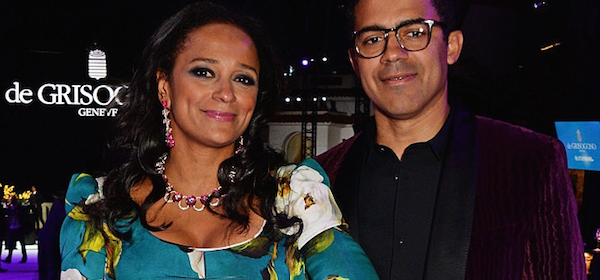
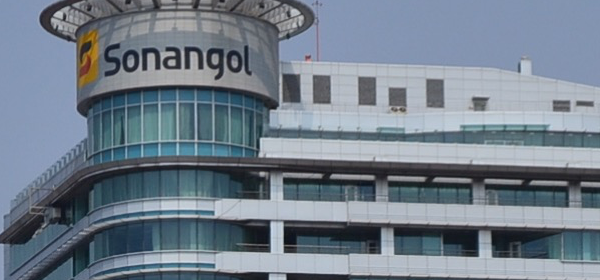
Has Angola’s President José Eduardo dos Santos lost his bearings?  Recent events suggest he is in the process of arranging a dynastic succession. His first-born daughter, Isabel dos Santos, has accumulated three major public projects: first, the Urban Redevelopment Master Plan for the capital city, Luanda; second, the Restructuring of the National Oil Company Sonangol (the largest state-owned company); and, finall, the Commission for the Restructuring of the Oil Sector. Isabel dos Santos is estimated to have become a billionaire (many would say thanks to her father) and has more than thirty companies to manage.  Why does the president need to hand over these major public undertakings to her? Could it be that she has extraordinary managerial and leadership abilities? Or not? Maka Angola has already outlined Isabel dos Santos’s likely intentions with the Master Plan for Luanda.  As things stand, Isabel will have ultimate control over an astonishing US $15 billion of funds for the […]

Read more

Sindika Dokolo: Chronicle of a Crime Foretold

The never-ending story of Angola’s long-serving President José Eduardo dos Santos (36 years in power and counting) and his billionaire family has resulted in yet another lawsuit being presented to the Office of Attorney General of the Republic for action.  This time, the alleged offender is the president’s Congolese son-in-law, Sindika Dokolo, the multi-millionaire businessman hitherto eclipsed by his billionaire wife, Isabel dos Santos. In short, a provincial governor already accused of illegitimately helping himself to land, then allowed the President’s son-in-law to acquire enough land to found a small city for a peppercorn price of less than US$10,000. Investigative journalist Rafael Marques de Morais, filed today the complaint against the Governor of the province of Kwanza Sul, General Eusébio de Brito Teixeira. The complaint also names as the governor’s partners in crime, the famed art collector Sindika Dokolo and his company, Soklinker (Soklinker Parceiros Comerciais, Lda), as well as its manager Luís […]

Read more

Land-Grabbing as a Path to Riches and Status in Angola

Angolan investigative journalist and human rights defender Rafael Marques de Morais has submitted a complaint to the Office of the Attorney General about the behaviour of notorious Kwanza-Sul Governor, General Eusébio de Brito Teixeira, for illegal land-grabbing. The complaint refers to yet more illegal appropriation of rural land, after having already grabbed more than 300 square kilometers to raise cattle and farming.  The Governor is suspected of three criminal offences:  the unlawful transfer of land from the State to an individual; unlawfully re-designating land for real estate development as rural land;  and  assigning  reduced value to these lands below their real commercial value (thus defrauding the State). Documentary evidence submitted with the complaint shows that on May 22nd, 2014, in his role as Governor of Kwanza Sul province,  the General made it known he had granted land surface rights to Ebrite Filhos Ltd., a company he formed with his children […]

Read more

Nigeria and Angola Take Two Extreme Approaches to Corruption

In response to the growing public demand and to end the proliferation of protests against corruption in Angola, in 2009, President José Eduardo dos Santos announced his new policy of “zero tolerance” of corruption. More than 2200 days have passed since his announcement and not one major corrupt figure has been arrested. From his actions, it is clear that he prefers to arrest and punish those who speak out against uncontrolled corruption rather than those who are actually guilty of corruption. Angola and Nigeria are the two largest producers of oil on the African continent; both countries, by all accounts, are the most corrupt in Africa. Both Angola and Nigeria are suffering because of the dramatic drop in the price of oil. The different ways both countries are trying to overcome their difficulties, and solve the problem of the shortage of money, presents a fascinating contrast. Angola’s strategy is to […]

Read more

General Eusébio counts on Friends in High Places to Protect Him

A recent report by Maka Angola detailing land appropriation by the Governor of Kwanza Sul Province, General Eusébio de Brito Teixeira, revealed how blatantly Angolan officials act in contravention of the most elementary rules of administrative procedure. It turns out that this was not an isolated act. Maka Angola has uncovered a second instance of illegal transfer of rural land by the same Governor – this time to a person who might be expected to offer the General  an “insurance policy” against punitive action. On January 26th, 2015, the Governor issued another land concession document to Soklinker Commercial Partners Ltd., granting surface land rights over 7,632 hectares of rural land for the purposes of construction. Soklinker is 75% owned by Sindika Dokolo, the husband of ‘First Daughter’ Isabel dos Santos, Africa’s richest woman. The remaining 25% is nominally held by Soklinker’s manager Luís Carlos Amorim da Luz Tavira, whose sister Catarina Tavira was […]

Read more

The Fate of Portugal’s BPI Bank Lies with Africa’s Richest Woman

One of Portugal’s largest and most venerable banks, the BPI Bank could be brought to its knees, not through bankruptcy or similar problems, but because its operations in Angola would be hamstrung if they lose their link to the Banco de Fomento de Angola (BFA). In the first six months of 2015, BFA operations made up 70% of BPI profits.  That shows the extent of the BPI’s dependency on this single financial institution in its Angolan operation.  And BPI’s partner in the BFA is none other than Unitel. Step forward Isabel dos Santos, billionaire daughter of Angola’s President Jose Eduardo dos Santos.  In other circumstances, it might be quite deliciously ironic to see a post-colonial African entrepreneur  – and a female to boot – take down a bank connected to the old boys’ club of Portugal’s well-heeled aristocracy (Santos Silva and Ulrich). In reality, it is much more complicated. Isabel dos Santos’s […]

Read more

Activist Lodges a Criminal Complaint against Land-Grabbing Governor

The activist Rafael Marques lodged today a criminal complaint in court against the Governor of Kwanza Sul Province, General Eusébio  de Brito Teixeira, for seizing land and then giving it to a company owned by himself. According to the submission delivered to the Office of the Attorney General, and to which Lusa had access, General Eusébio de Brito Teixeira even wrote a petition to the governor of Kwanza Sul Province – that is, to himself – to request the legal rights to land for the construction of a condominium. The letter is dated May 4, 2014; a month later, on June 6, the local Sumbe municipal administrator, where the lands in questions are based, sent the governor of Kwanza Sul province, with a copy to General Eusébio Brito Teixeira, a statement saying local entities were in favor of the proposal, and that the governor should immediately grant legal rights that he […]

Read more

Welcome to Angola, Nicki Minaj

Dear Nicki, I welcome you to Angola. I am a journalist and human rights defender who has been at the forefront of exposing the dictatorial ills of the regime, whose first daughter and princess of state-looting, Isabel dos Santos, is your host. Moments ago I received a message on my cell phone, from an UNITEL operator  offering me a ticket to your concert tomorrow with the purchase of a 900 kwanzas (US $4.50) phone credit. That is for your concert “for the people” in the Coqueiros Stadium, with a capacity of 20,000 people.  UNITEL is the company jointly owned by Isabel dos Santos and the Angolan state, which is paying your fees. In spite of all the advertising campaigns undertaken by UNITEL to promote your concert “for the people”, sales have been in a slump. At 900 kwanzas per ticket, the concert is basically free, yet people are still not […]

Read more
1 6 7 8 9 10 16