Billionaire Isabel dos Santos and Money Laundering Schemes

They may have trampled on international laws and guidelines, yet the authorities continue to apply the old maxim that the law only applies to enemies. First, the facts: In June 2015 it was announced that Isabel dos Santos, the billionaire daughter of the president of Angola with A fortune of unknown origin, would buy Efacec, a leading Portuguese engineering company . The purchase price would be € 200 million. Also in June 2015, reports were circulated that Efacec, after the purchase, would become the supplier of electrical equipment for three dams under construction in Angola, namely Cambambe and Lauca. The purchase made by the new star of the jet set of the Côte d’Azur would be made by a front company: a company that exists as a legal entity solely to do business on behalf of others. The front company set up for the purchase of Efacec is named Winterfell Industries. By […]

Read more

The Emergence of Fascism in Angola

Allard Prize acceptance speech, Vancouver, Canada. I am deeply honored to be here today, at this great University of British Columbia’s Allard School of Law and most grateful for being selected the joint-recipient of the prestigious Allard Prize for International Integrity. Sharing this Prize with John Githongo, who has always been an inspiration to me, is humbling, and a double honor.  I pay tribute to the finalists, the Indonesian Corruption Watch and the late Sergei Magnitsky, for their outstanding work. I dedicate the Prize to my family for their love and unconditional support. The journey I have taken to merit your recognition has a fine irony that I would like to share with you. In 2009, after I had finished a Master’s degree at Oxford University, I returned home, to Angola, with no prospects of getting a job.  I had become more dangerous to the power holders for I had […]

Read more

Kenyan and Angolan Journalists Awarded Prize for Integrity

Two African journalists known for exposing corruption in their respective countries of Kenya and Angola have been named the joint recipients of the 2015 Allard Prize for International Integrity. The Peter A. Allard School of Law at the University of British Columbia presented John Githongo and Rafael Marques de Morais with the Allard Prize at a special ceremony last night. The $100,000 prize is one of the world’s largest awards recognizing efforts to combat corruption and to promote human rights. As joint recipients, Mr. Githongo and Mr. Marques de Morais were each awarded $50,000 for their brave efforts in protecting human rights and fighting corruption. “It is a singular honour and a humbling experience to be selected for the Allard Prize,” says Mr. Githongo. “This recognition serves as an encouragement and as an important recognition that there is across the world a partnership between all people who care about human […]

Read more

Cement Law Benefits a Few at Angola’s Expense

There is a question so puzzling that is leaving many with open mouths. Why would a country rapidly trying to construct its infrastructure (which needs cement) suddenly ban the importation of the same material? The same country is not able to manufacture the product in the necessary quantities. This is a question that has been prompted by the recent investigation by Rafael Marques de Morais about the wheeling and dealing in the setting up of the cement manufacturer FCKS (Fábrica de Cimento do Kwanza Sul). A recent investigation by Rafael Marques de Morais, about the wheeling and dealing in the setting up the cement manufacturer FCKS (Fábrica de Cimento do Kwanza Sul), has prompted the abovementioned question. Every year, Angola needs about 7 million tonnes of cement, but the local production does not meet half of this amount. Therefore, many wondered about the rationale behind the Executive Decree no 15/14, […]

Read more

Oil and Cement Don’t Mix With Corruption in Angola

Angolan business practices are under the microscope again after a US$800 million  government-backed cement factory suspended production, and its recently dismissed CEO announced a sell-off of shares whose ownership is in question. An investigation by Maka Angola suggests the confusion surrounding the state of affairs at the Kwanza Sul Cement Factory (Fábrica de Cimento Kwanza Sul) can be traced directly to Angola’s ‘unique’ business practices under the current MPLA government, led for the past 36 years by President José Eduardo dos Santos. The Angolan colonel who founded the company has been sacked, the operating costs have become uneconomic and the Danish company LNS in charge of running the plant says it’s owed US$20 million in unpaid fees.  Legal experts have told Maka Angola that the uncertain future of the Kwanza Sul Cement Factory (FCKS) is directly related to its tangled history. Ownership and finances as clear as mud The origins […]

Read more

Angola’s Sovereign Fund Pays US $100 Million to a Shell Company

On 22 January 2015, Angola’s Sovereign Wealth Fund (FSDEA) transferred the sum of 9 948 750 000 kwanzas (equivalent at the time to US$100 million) to the company Kijinga S.A. This company is nothing more than a shell company set up as a front for shady transactions by Banco Kwanza Invest (BKI), a bank created by the 36-year-old José Filomeno dos Santos “Zenú”, the current chair of the FSDEA and the son of the President of the Republic. Kijinga S.A. shares an office with BKI at 150 Avenida Comandante Jika, next to the Maternity Hospital in Luanda. This address has only one business door, which opens into a small waiting room where there is a reception area and two chairs for visitors. One of these chairs is usually occupied by a security guard, in addition to the guard on duty outside the door. The windows are darkened glass, which does […]

Read more

Crisis, What Crisis in Angola?

As Angola’s economic crisis deepens, the country’s president has given priority to the construction of a war memorial at an estimated cost of US $72 million, and a further US $73 million going to a phantom category of “non-specific religious affairs and services”.  These projects fall under the Office of Special Works of the Presidency of the Republic. Both expenditures are part of the revised 2015 budget, passed by the National Assembly on March 20, which was slashed by 25 percent (over US $17 billion) – including cuts in the salaries of civil servants. Despite the reduction of the budget due to the fall in oil prices, the president’s  set of priorities are baffling. Oil accounts for approximately 95 percent of Angola’s total exports, and its economy is mono-dependent on this commodity. For instance, the largest state-funded religious project, the construction of the Sanctuary of Muxima for the Catholic Church, […]

Read more

Government Profits from Beer and Blames the Oil Prices

The crisis, which the government blames on falling oil prices, has been used to disguise a much older and deeper crisis  that already existed long before the reasons given by the government lately. The Court of Accounts provides some alarming evidence in its report to parliament on the Government’s Budget Execution Report for 2013 . According to the Court of Accounts report, reviewed by Maka Angola, in 2013 the state was paid dividends to the tune of 95.4 million Kwanzas (US$954,000) on its direct shares in a total of 37 companies. The sum is ridiculously low given the government’s multi-billion dollar investments in the private sector. Apart from the national oil company Sonangol, the state only made a profit on beer sales from its shares in three beer producers. Dos Santos’ government billed Cuca for 67.9 million Kwanzas; a further 23.5 million from N’gola and another 4 million from Eka. […]

Read more

The 2013 Budget Trickery and the Looting in the TB Sanatorium

As the current economic crisis in Angola has deepened, citizens are finally beginning to ask how tens of billions of dollars in oil revenues have been spent. In its report on the 2013 state budget spending, the Court of Accounts sheds light on how many members of the government engaged in squandering and pilfering  public funds. The court carried out fact-finding visits to the Ministries of Construction, Health, Education, Transport, Energy and Water, as well as Urbanisation and Housing. The report will be discussed by the National Assembly next June, but Maka Angola is providing an exclusive preview of some of the disturbing findings. At the top of the list is the Construction Ministry, which entered into contracts to the tune of US $2 billion without “prior authorisation from the CA [Court of Accounts], and which were not submitted to prior oversight” as required by law. The CA highlights the […]

Read more

Crashing Oil Prices, Propaganda and the Angolan Recipe for Disaster

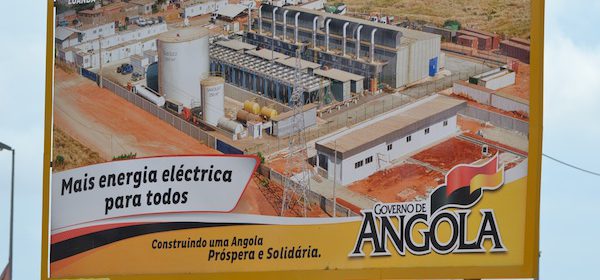
Throughout the Angolan capital, Luanda, strategically located billboards announce a country being happily stewarded through development by the government. “Building a prosperous Angola based on solidarity”, is the boastful slogan across all ads celebrating the government’s achievements in all spheres of life. One such billboard celebrates “more electricity, more development”, in spite of the regular power outages. Such a massive propaganda exercise outside the electoral period has a precedent only in the early 1970s, when the Portuguese colonial authorities desperately tried to sell the idea that their rule was making people very happy, and independence could ruin all such great achievements. Nonetheless, this propaganda is in full swing at a time when the steady drop in the oil price on international markets could be good news for the Angolan people and a bad omen for their rulers. As a major countermeasure, last December the presidency decreed a 20 percent rise […]

Read more
1 … 8 9 10 11 12 … 16