Open Letter to João Lourenço: Accountability for Silence
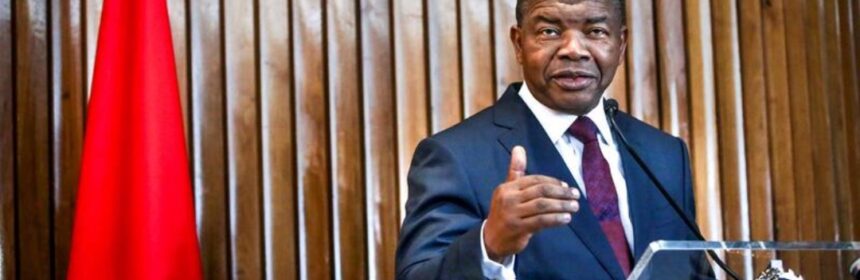
To His Excellency The President of the Republic of Angola João Manuel Gonçalves Lourenço Your Excellency, A criminal investigation into deals worth more than 4.4 billion kwanzas at the General Tax Administration (AGT) has been left “forgotten” at the Attorney General’s Office (PGR). According to Maka Angola’s reporting, those named in the complaints continue to rise through the state hierarchy. You promoted José Vieira Nuno Leiria to secretary of state for tax affairs. Finance Minister Vera Daves de Sousa appointed Bráulio Assis as Leiria’s chief of staff. Faced with allegations, those in power respond by granting impunity. You bear direct political responsibility for these choices as head of the executive. What interests justify such confidence in people who owe the country so many explanations? These questions have a history. In April 2020, in the article “A Government without Institutional Coordination”, I argued for the appointment of competent officials, free of […]

Read more

Cotton Candy at Angola’s Tax Authority (Part I)

José Leiria chaired Angola’s General Tax Administration (AGT) until 8 September 2026, when he was appointed secretary of state for tax affairs. Finance Minister Vera Daves has since appointed Bráulio Assis, AGT’s former communications chief, to head Leiria’s office. Both men feature in Maka Angola’s investigations into the authority’s dealings with In Pressionante Kianda. Earlier reporting showed how the company helped shape the tender it went on to win. Messages attributed to Assis indicate that he advised the bidder while chairing its evaluation committee. Their advancement gives Angolans further reason to fear state capture, with officials whose conduct demands scrutiny gaining greater authority. In a country where millions of children go hungry and have no access to school, even a cloud of sugar can provide a way to extract public money. Cotton candy, made mostly of air and sugar, looks more substantial than it is. In AGT’s business dealings, that […]

Read more

The Finance Minister and the Kianda Quagmire

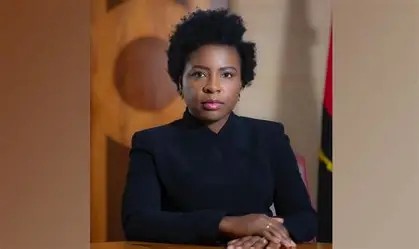
Vera Daves de Sousa, Angola’s finance minister.

Angola’s finance minister, Vera Daves de Sousa, has chosen to put her political authority behind officials at the General Tax Administration (AGT) implicated in Maka Angola’s investigation into the Kianda companies. After José Leiria, the AGT’s former chairman, became Secretary of State for Tax Affairs on 8 September 2026, Daves appointed Bráulio Assis as his chief of staff. The team is moving up the state hierarchy. Questions about its business dealings remain unanswered. Assis chaired the evaluation committee for the tender that In Pressionante Kianda helped to prepare and went on to win. Messages obtained by Maka Angola show him guiding the bidder he was supposed to assess. By choosing him to head Leiria’s office, Daves has publicly expressed political confidence in both men and assumed responsibility for that choice. What ethical standards govern the finance minister’s appointments? The issue is not the presumption of innocence. It is the reward […]

Read more

Angola’s Tax Authority Hires Money-Laundering Suspect to Investigate Tax Crime

Angola’s Tax Authority (AGT) has awarded Portuguese academic Carla Trindade two consultancy contracts worth a combined 551 million kwanzas to help investigate tax offences. Yet documents reviewed by Maka Angola point to irregularities in dealings between her husband’s company and the same authority. She and her husband are also named in a criminal complaint formally lodged with prosecutors alleging money laundering, tax evasion and other offences. Trindade teaches tax law, tax litigation and arbitration at the Portuguese Catholic University’s Lisbon School of Law, where she coordinates the postgraduate programme in tax litigation and a short course on crime and taxation. She also teaches economic and business law at Católica Lisbon School of Business & Economics, and taxation on the master’s programme in business law at the Catholic University of Angola. She is entitled to the presumption of innocence. The central question is why the AGT hired her to help investigate […]

Read more

Angola’s Tax Authority Awards Kz3.15bn Contract to Company That Helped Shape Its Own Tender — Part II

The tender was publicly announced on 15 November 2023. In Pressionante Kianda, however, had only two workers with active registrations at the National Social Security Institute — and had to submit 20 technical profiles. Messages attributed to Bráulio Assis, chair of the tender evaluation committee, appear to show him providing advance information, suggesting responses and giving his “OK” to the company that would go on to win. In Part I of this investigation, Maka Angola reported that Carla Trindade received tender documents before the announcement, discussed changes with AGT officials and wrote to the shareholders: “We were the ones who drafted the tender rules.” After the formal launch, that proximity continued as the bid was assembled and assessed. Twenty Profiles and Two Registered Employees The revised tender documents allowed bidders to draw on external resources. Even so, messages from 28 November show Kianda scrambling to assemble the minimum 20 profiles. […]

Read more

Angola’s Tax Authority Awards Kz3.15bn Contract to Company That Helped Shape Its Own Tender — Part I

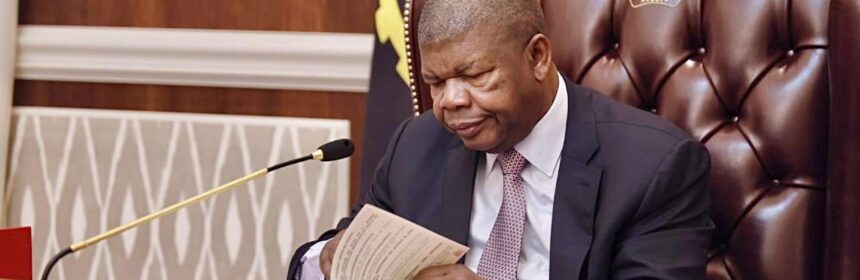
When Angola’s General Tax Administration (AGT) announced a billion kwanza (US$1.2 million) tender for its communications plan on 15 November 2023, one of the eventual bidders had already seen the tender documents, proposed changes to the requirements and received the final version from the tax authority itself two days before publication. In Pressionante Kianda won. Messages, drafts and successive versions of the documents show that the bidder did more than compete. It helped shape the tender before it was opened to the public. Nearly five months before the notice was published, Carla Marisa Castelo Trindade Martins told the shareholders that “everything is in place for us to win the tender”. The statement appears in her own written account of a meeting with José Vieira Nuno Leiria (main photo), then chairman of AGT’s board. President João Lourenço underscored his confidence in Leiria by swearing him in on 10 September 2026 as […]

Read more

Constitutional Breach: Secretary of State Remains Director-General of IGCA

On 3 March 2026, four months after assuming office as Secretary of State, Conceição Cristóvão convened IGCA employees to a meeting scheduled for 6 March to discuss the institute’s internal functioning — signing the notice in his capacity as Director-General. Today, 6 March, he has presided over that meeting. Similarly, Adilson Freire, who serves as head of the IGCA Director’s Support Department, combines these duties with those of chief of staff to the Secretary of State for Urbanism and Housing. Symptomatically, Adilson Freire took office as chief of staff to the Secretary of State in a private ceremony, without this information being posted on the Ministry’s website. Since 30 October 2025, Conceição Luís Cristóvão has served as Secretary of State for Urbanism and Housing. Under the Angolan Constitution and the legal framework governing public administration, appointment to this office makes it incompatible for him to continue exercising the functions of Director-General […]

Read more

Angola’s U$61.5 Billion Contracts by Presidential Decree. No Public Tender

In Angola, major public spending decisions are often not announced in televised addresses or debated on the floor of Parliament. They appear instead in the Diário da República — formal presidential decrees, written in technical language, authorizing contracts that can reshape entire sectors of the economy. Between 2017 and today, at least US$61.5 billion has been approved through one such mechanism: simplified procurement. That figure emerges from a review of 476 presidential decrees, drawn from more than 500 examined during President João Lourenço’s two terms in office. It is not a complete accounting of all direct awards issued over eight years. It is a documented sample. Yet even as a partial record, it reveals the scale at which executive discretion has operated. Of the 476 decrees analyzed, beneficiaries could be identified in 273 cases. In the remaining 203 — representing 42.6 percent — no beneficiary is publicly named. Those unidentified […]

Read more

Carrinho: The Sanctions Shadow Behind Angola’s Industrial Showcase

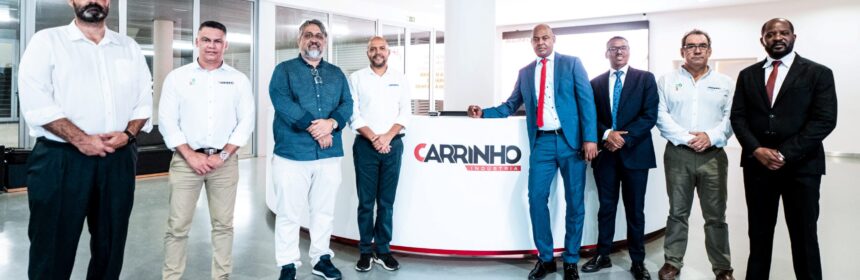
Angola’s most celebrated industrial project was financed in part by a trader later sanctioned by the European Union and the United Kingdom. There is no proof of wrongdoing by Carrinho — but the absence of transparency leaves troubling questions unanswered. After examining how public contracts and sovereign guarantees have concentrated economic power in Angola (see the first part of this dossier), this second investigation looks at the international ties of the Carrinho Group — including partnerships with entities linked to sanctions proceedings in Europe — and the due-diligence and transparency questions that follow. Carrinho’s business relationships with several international entities warrant heightened scrutiny, particularly given the lack of publicly available financial information and the complexity of the corporate structures involved. Confirmed links connect Carrinho to Manty AG, based in Switzerland and led by Maurice Taylor, and to Paramount Energy & Commodities, founded by Dutch trader Niels Troost. Manty AG appears […]

Read more

Angola: When the Party Enters the Bank

Angola’s continued placement under enhanced monitoring by the Financial Action Task Force(FATF) has once again exposed deep structural weaknesses in the country’s banking system. More than the existence of laws, what is at stake is Angola’s ability to demonstrate, in practice, an effective separation between political power, bank ownership, and financial supervision. The high concentration of politically exposed persons (PEPs) within the financial system — often concealed through opaque corporate structures — continues to undermine institutional credibility in the eyes of international regulators and partners. When the FATF placed Angola under enhanced monitoring in October 2024, the decision was framed as a technical alert. It led to clear political-institutional and economic consequences: heightened international scrutiny, increased compliance costs for correspondent banking relationships, and a higher perception of country risk. The overlap between political power and the banking system is not new in Angola. Over the years, several financial institutions have […]

Read more
1 2 3 … 16