The Chimera: A Case for the Angolan Legal System

In 1982, faced with irreconcilable internal problems, the Argentinian dictator, Leopoldo Galtieri, decided to employ diversionary tactics and invaded the Falkland (Malvinas) islands, a British overseas territory. Once the initial excitement had died down, the dictatorship inevitably collapsed. At the moment, the Angolan panorama bears a marked resemblance to the Argentinian panorama of 1982. In addition to the crisis of prolonged power due to the complete breakdown of State institutions, there is a deep economic and financial recession, in which the symbol of power and wealth in Angola, Sonangol, arises like a giant with clay feet, on the brink of collapse, with all the appearance of having been the subject of complete mismanagement (to say the least). Faced with this situation, the president, more adept than the dictator of the Galtieri farce, fostered a chimera. It is not a coup d’état, it is not an attempted coup d’état, rather it […]

Read more

I Believe in the Power of Solidarity

With an award comes a greater responsibility. It is therefore my privilege to accept this journalism award [from Index on Censorship], and dedicate it to my fellow Ethiopian colleagues Eskinder Nega, Reeyot Alemo, and the Zone 9 bloggers. They are in jail, currently serving some of the harshest sentences in Africa, for the crime of exercising their right to freedom of expression. For over a year, the Ethiopian government has denied adequate health care to Reeyot Alemu, who is in desperate need. Ethiopia is the seat of the African Union, and its regime is one of the worst offenders for upholding the freedoms of the press and of expression. When a regime in Africa succeeds in trampling their citizens’ rights with impunity, and enjoys such good international standing and legitimacy as Ethiopia, it becomes a textbook case for other authoritarian regimes. I believe in the power of solidarity. I have […]

Read more

The MPLA: Speeding Angola up or holding it back?

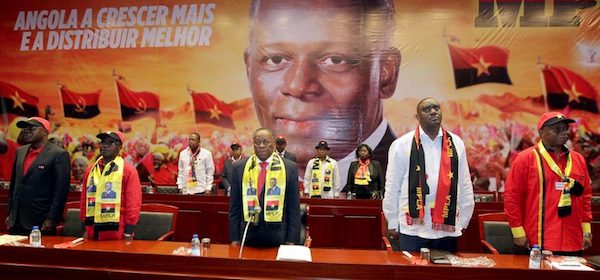
The MPLA Political Bureau has welcomed the government’s program to speed up the diversification of the national economy, beyond its current domination by the petroleum industry. The Politburo’s statement on 31 March made a special recommendation: that the government should train the personnel necessary to put the plan into practice. However, there is a contradiction here that needs to be analyzed. Let’s start with the idea of “speeding up”. As long ago as 12 February 2009, President José Eduardo dos Santos said “it is necessary to speed up economic diversification by making and promoting investments in other areas of production”. Four years later, the idea of speeding up economic diversification was incorporated into the National Development Plan for 2013-2017, of which implementation began last year. If it is indeed a process of acceleration, it has been a very slow one. As its priorities for economic diversification, the plan aims to […]

Read more

The Logic of Democracy in Angola

I am reading this and I can’t believe it. So I read it again: “When people, including some politicians, say that there is a dictatorial regime in Angola, this is not true”, says Paulo de Carvalho, professor of the Faculty of Social Science of the Agostinho Neto University, in Luanda. He made this statement at a conference organised by the Centre for African Studies of the Institute of Political and Social Science in Lisbon (ISCSP), under the theme “Democracy and citizens’ rights in Angola”. In order to substantiate his belief, Paulo de Carvalho referred to an event which had taken place a while back in the Mário Soares Foundation in Lisbon, where the journalist and human rights activist had criticised the Angolan regime, and the scholar had replied to him thus: “If there was a dictatorial regime in Angola, you, my friend, Rafael Marques, would not be here speaking on […]

Read more
1 2 3