
Lourenço Is Closing Angola’s Safety Valves
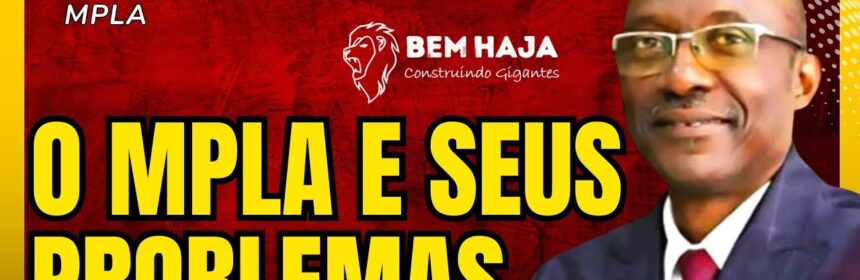
Angola’s president, João Lourenço, appears to have found the formula for perfect competition. Seeking another term as leader of the MPLA, Angola’s ruling party, he is running against himself. Victory is assured before a vote is cast. All that remains is to convince the country that the absence of opponents proves the winner’s greatness. In fact, it reveals his profound weakness. Lourenço will march from victory to victory until his final defeat.
Today, 11 November, Angola marks 51 years of independence and 51 years of uninterrupted MPLA rule.
In engineering, no closed system can withstand mounting pressure indefinitely. Boilers, dams and reactors need ways to release it. Safety valves exist because designers recognise that systems have limits. Closing them does not eliminate the pressure. It only makes an explosion more likely.
Politics follows much the same logic. Competitive elections, internal debate, a pluralistic press, civic organisations, local government, unions, religious organisations, universities and social movements allow conflicts to find expression before they become crises. The most stable systems accept some dispersal of power. The most insecure seek to concentrate it until they suffocate the system.
That is Lourenço’s mistake. By eliminating these safety valves, he reduces the Angolan political system’s capacity to adapt to a changing society.
Recently, the MPLA disqualified António Venâncio, a rank-and-file member, from its leadership election. Venâncio never posed a threat to the party leadership. He had no realistic prospect of winning. Yet his candidacy offered something valuable: the possibility of public debate within the party. Since independence in 1975, the MPLA has held only single-candidate leadership elections.
His candidacy could have allowed ideas to circulate, grievances to surface and alternative leaders to be tested. Accepting the contest would have allowed the MPLA to claim some internal democratisation. Blocking it exposed a leadership afraid even of opponents it could defeat. Lourenço prefers to win by default after shutting his rivals out. He will win without winning anyone over.
By preventing such competition, Lourenço has not eliminated discontent. He has merely driven it underground, scattered and beyond his control.
The MPLA will elect its president at its ninth congress in December, roughly eight months before the 2027 general election. The party is expected to name its presidential candidate at that congress, since the constitution bars Lourenço from seeking a third term as head of state.
Within the party, questions are mounting over Lourenço’s lack of transparency in choosing the presidential candidate for 2027. Economic problems compound the political unease, along with fears of cuts to health and education and the erosion of popular support already evident in the 2022 elections. The party is worried about its future. Its leadership seems preoccupied with avoiding competition.
Taken together, these tensions reveal a party anxious about its electoral future, struggling with internal divisions, a lack of renewal and a widening distance between its leadership and parts of its own political base.
For decades, the MPLA accommodated different political, regional and generational interests. It was a forum for negotiation among groups seeking influence. Today, it is closing itself off, shaped entirely in its president’s image. Advancement appears to reward bureaucratic loyalty, while familiar circles repeat familiar formulas. The more tightly the party closes ranks, the less it understands the country it seeks to govern.
The media offer another example. A press that identifies problems, exposes failures and gives grievances a hearing helps relieve political pressure. When state media exclude dissenting views, criticism migrates to social media, where a censored comment can go viral.
Those in power lose the opportunity to listen without gaining the ability to silence. Excessive control breeds resentment and fuels forces the leadership has not reckoned with.
Perhaps the greatest missed opportunity, however, is elected local government. Beyond decentralising administration, it would distribute the political costs of governing. In Angola’s highly centralised system, every broken road, school without teachers and hospital without medicines ends up at the president’s door. Even a lack of toilets becomes a presidential matter. Whoever wants to control everything ends up responsible for everything.
Elected local authorities would allow citizens to distinguish national responsibilities from local ones. Both the ruling party and the opposition would have to manage resources, solve practical problems and answer for their performance. UNITA, the main opposition party, would face that test too. It would have to demonstrate an ability to govern as well as to criticise.
Some of the energy now concentrated on replacing the national leadership would shift towards running municipalities. Political competition would have tangible consequences for everyday life. Citizens could compare performance and make informed choices.
Elected local government could therefore strengthen the system’s stability. For the MPLA, it would offer a chance to win popular support through results, share responsibility and allow other leaders to emerge. But that would mean accepting that the country can function without asking the same man’s permission for everything.
Lourenço believes he is consolidating his power while squandering the MPLA’s dwindling chances of remaining in government with popular consent and legitimacy. He wants to run against himself alone, yet even then he cannot escape his worst adversary: the public’s judgement of his own record in office.