Crashing Oil Prices, Propaganda and the Angolan Recipe for Disaster

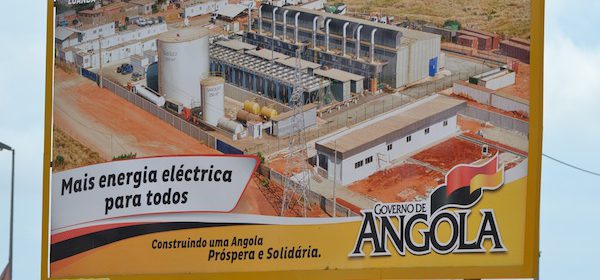
Throughout the Angolan capital, Luanda, strategically located billboards announce a country being happily stewarded through development by the government. “Building a prosperous Angola based on solidarity”, is the boastful slogan across all ads celebrating the government’s achievements in all spheres of life. One such billboard celebrates “more electricity, more development”, in spite of the regular power outages. Such a massive propaganda exercise outside the electoral period has a precedent only in the early 1970s, when the Portuguese colonial authorities desperately tried to sell the idea that their rule was making people very happy, and independence could ruin all such great achievements. Nonetheless, this propaganda is in full swing at a time when the steady drop in the oil price on international markets could be good news for the Angolan people and a bad omen for their rulers. As a major countermeasure, last December the presidency decreed a 20 percent rise […]

Read more

Isabel dos Santos’ Campaign, her Father, George Soros and Me

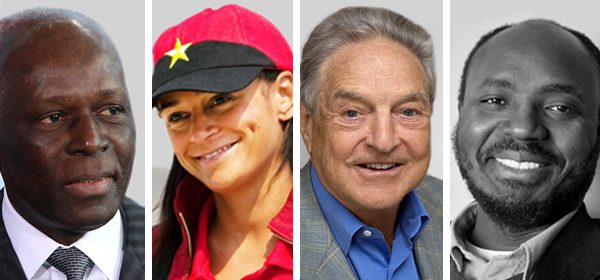
Isabel dos Santos Portuguese communication consultants, led by Luís Paixão Martins, have for several months been trying to wage a campaign against the author of this article. They have presented no evidence to disprove what I have revealed about the president’s daughter business dealings, particularly acts of corruption by her father. Attempted defamation   Instead, so desperate are they to find a way of attacking me, the author of Maka Angola,  that they have tried to find impropriety in his former links to the NY-based Open Society Institute (OSI), funded by the billionaire philanthropist George Soros. The same ruse has already been attempted without success by the Angolan regime’s own propaganda machine. Nevertheless, the deviousness with which the Portuguese public relations consultant took up this theme is in itself revealing, though more for the crass propaganda campaign than by its content. At the same time, the scheme offers an opportunity […]

Read more

Alternating Demonstrations: Political Protest and the Government’s Response in Angola

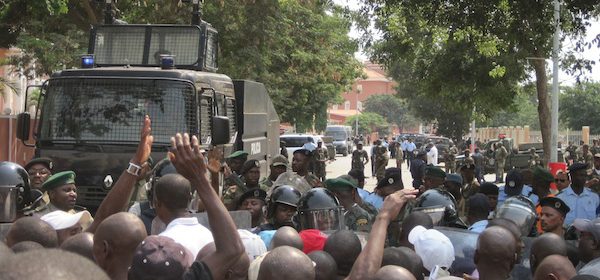
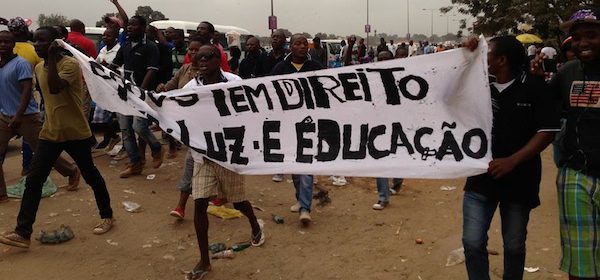
In March 2011, at the height of the North African street protests, an anonymous letter went viral. It called for a mass demonstration in Luanda’s Independence Square, in the capital of Angola, on March 7, 2011. At this symbolic demonstration, the police arrested all seventeen individuals who attended, including three journalists and their driver who were there to cover the event. The ruling Popular Movement for the Liberation of Angola (MPLA) politburo accused Western intelligence services, as well as pressured groups in Portugal, Italy, France, Belgium, Great Britain, and Germany, of disseminating the online letter that demanded an end to President Jose Eduardo dos Santos’s thirty-two year rule. In an anticipated counter-offensive, the MPLA held pro-dos Santos demonstrations in several parts of the country on March 5, 2011, at a staggering cost of over $20 million from the party coffers. State media propaganda claimed that, in Luanda alone, the march […]

Read more
1 2 3